A cultural heritage trail proposal for Kuala Kubu Bahru — illustrated mascot, hand-drawn map, 3D-printed puzzle souvenir, and a laser-cut keychain. Built to make heritage feel like something worth visiting.
KKB is a small town north of KL with a rich but underloved history — colonial buildings, a clock tower, food street, a riverside, stories stretching back to the British era. The brief: conduct site analysis, propose a cultural trail, and design a souvenir to go with it.
The challenge was depth. Anyone can draw a map and call it a trail. Making it feel alive — with a narrative, a mascot, a physical artefact — took it somewhere different.
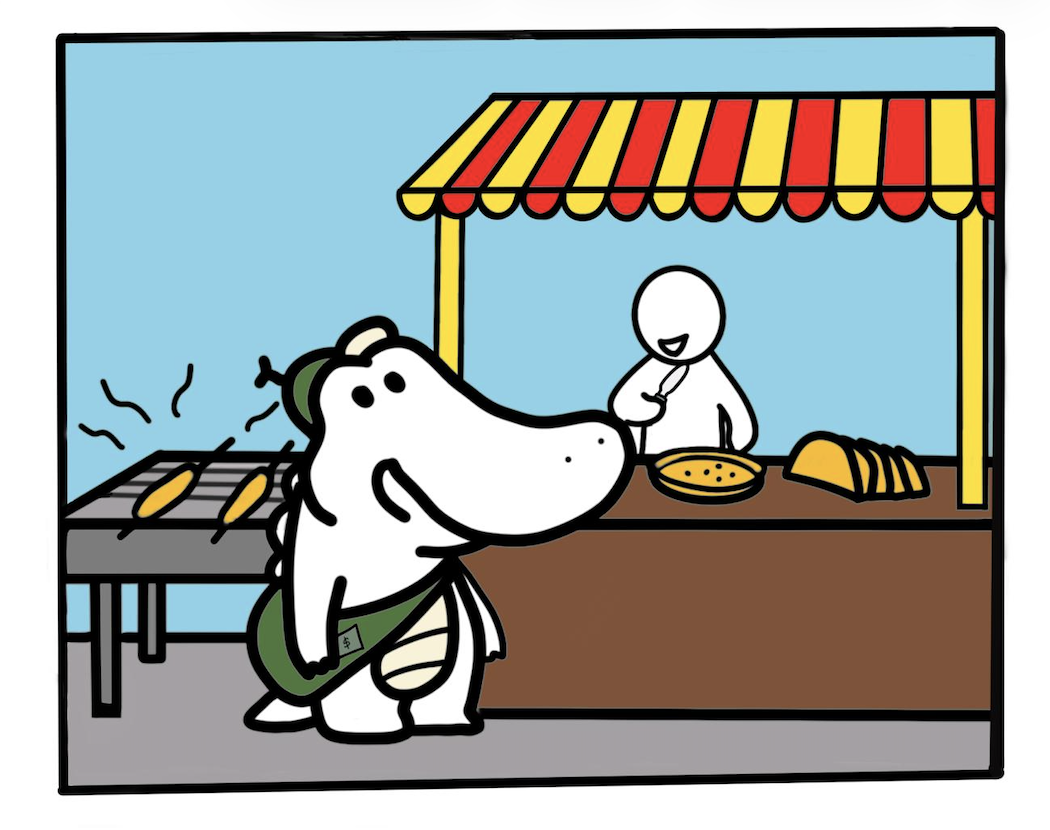
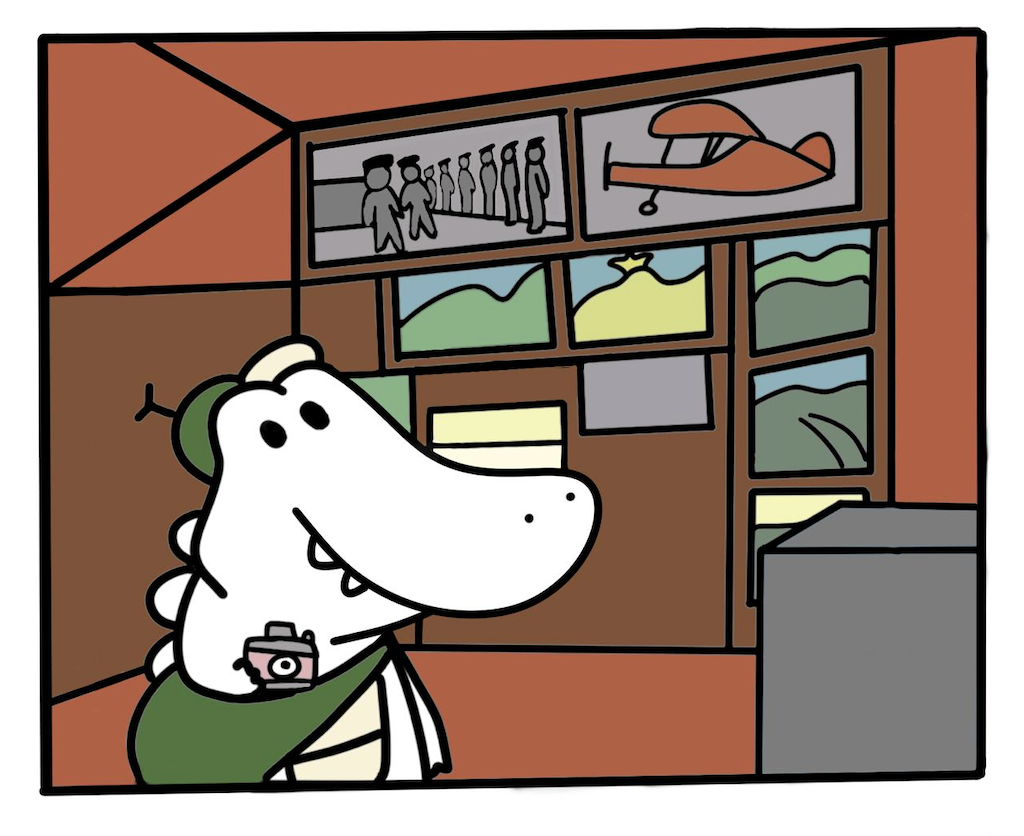
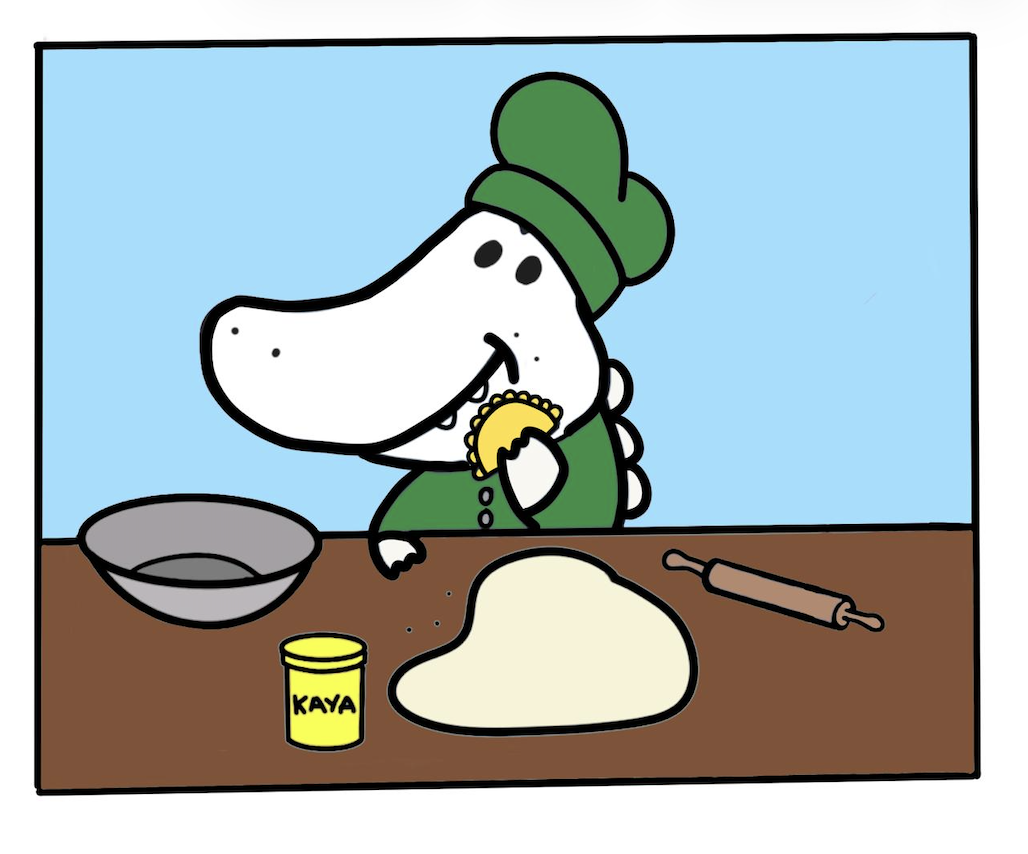
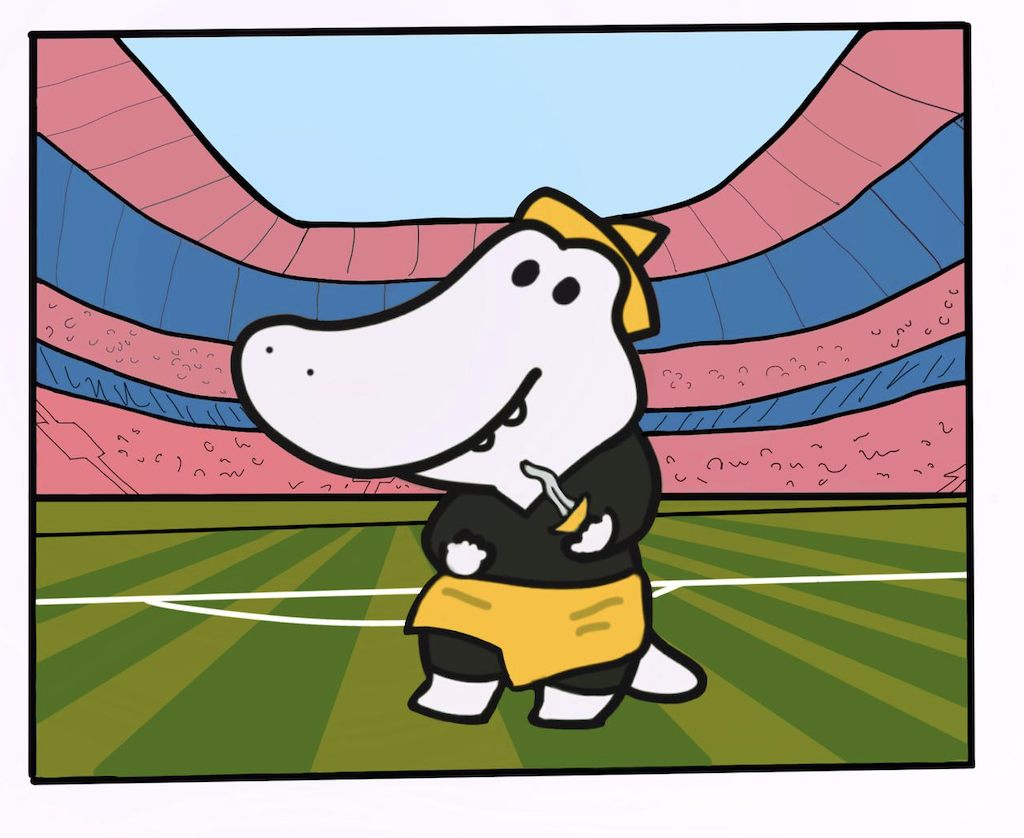
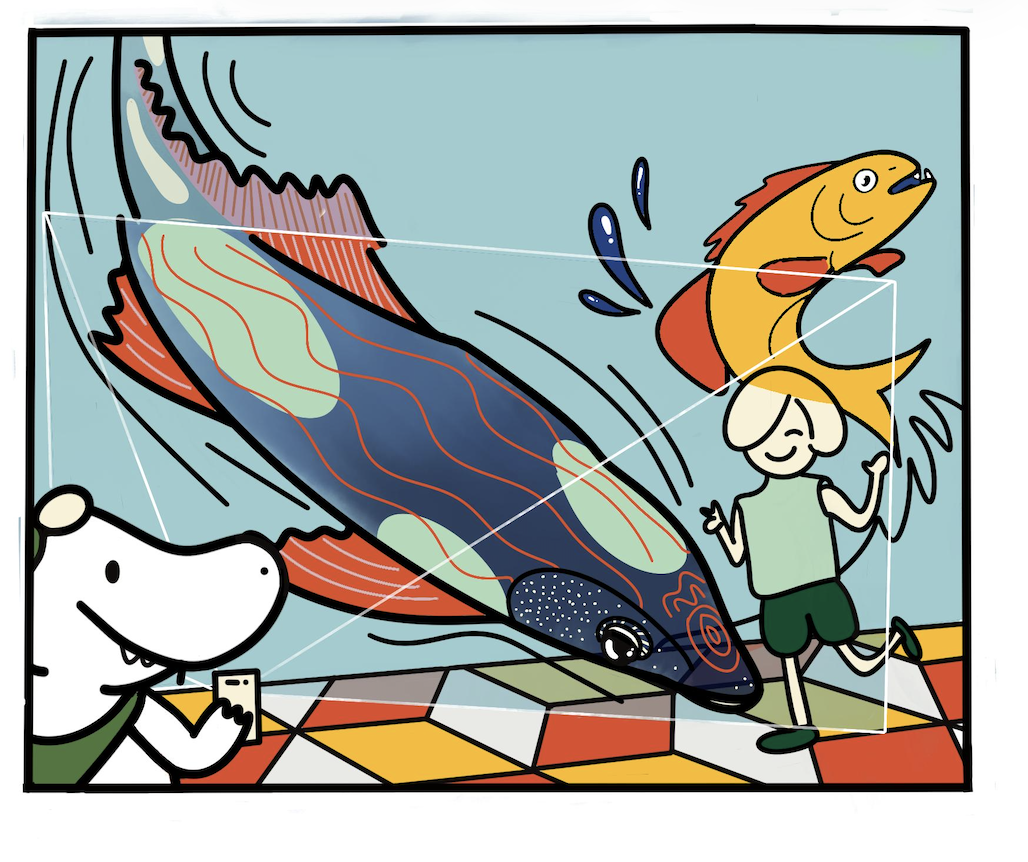
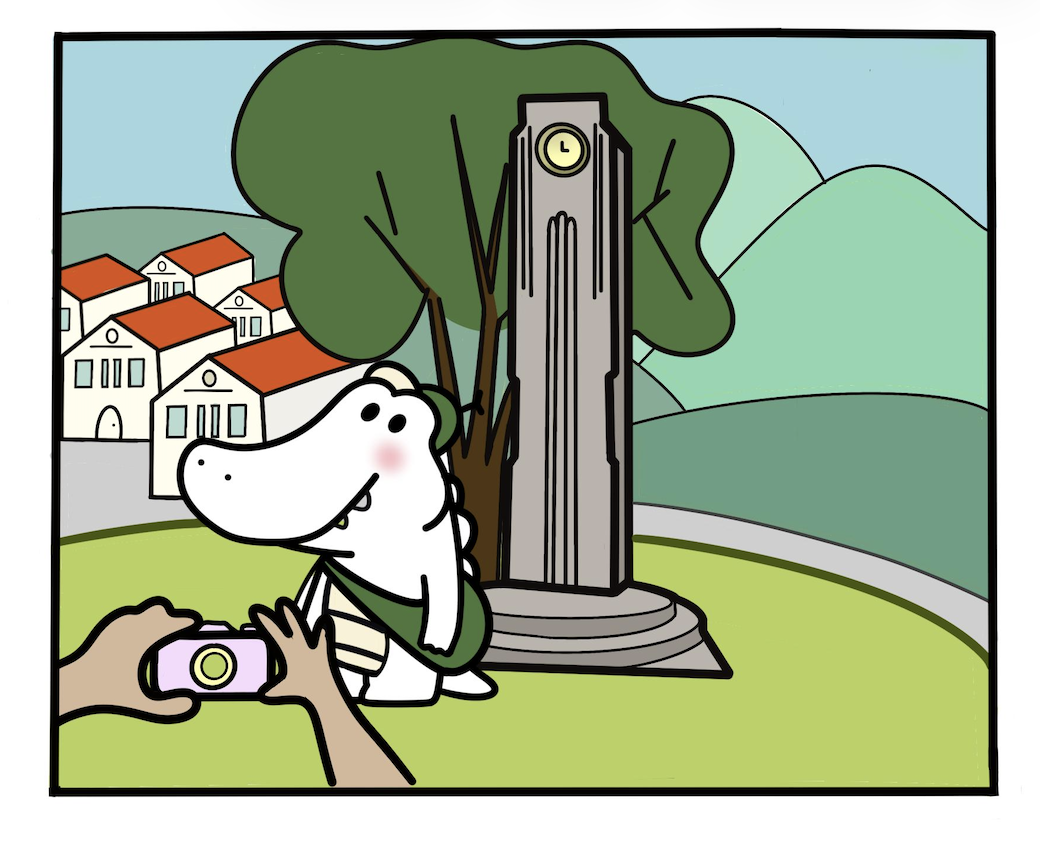
Yaya is the trail mascot — inspired by KKB's legendary white crocodile said to guard the Selangor River. Friendly, curious, and perpetually snacking, she guides visitors through each stop in a series of illustrated comic panels.
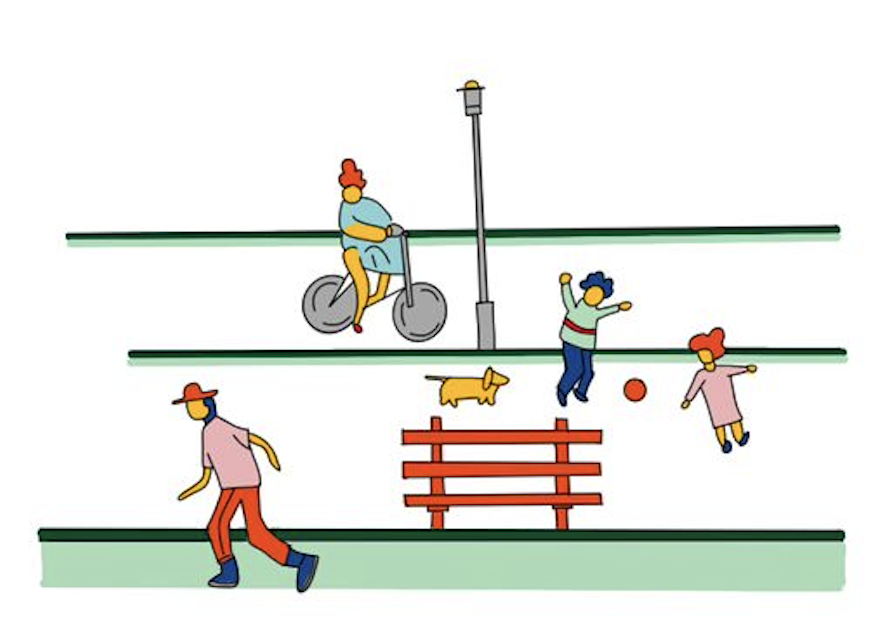
Each illustration places Yaya at a specific location: the Clock Tower, Food Street, the museum, the market. The visual language is warm and immediately approachable — designed to work for families and tourists alike.


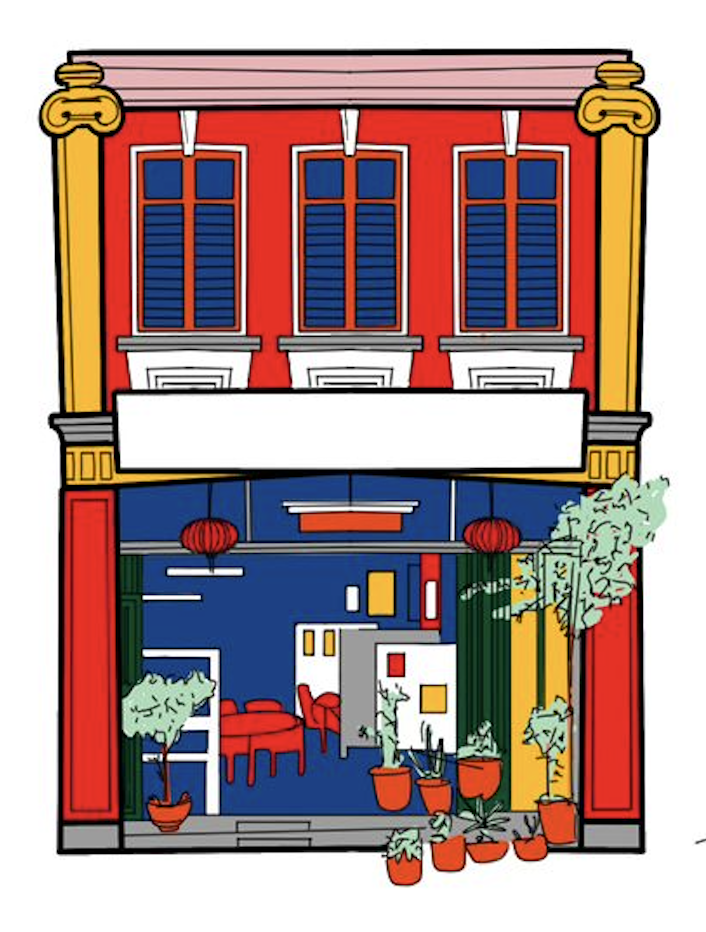
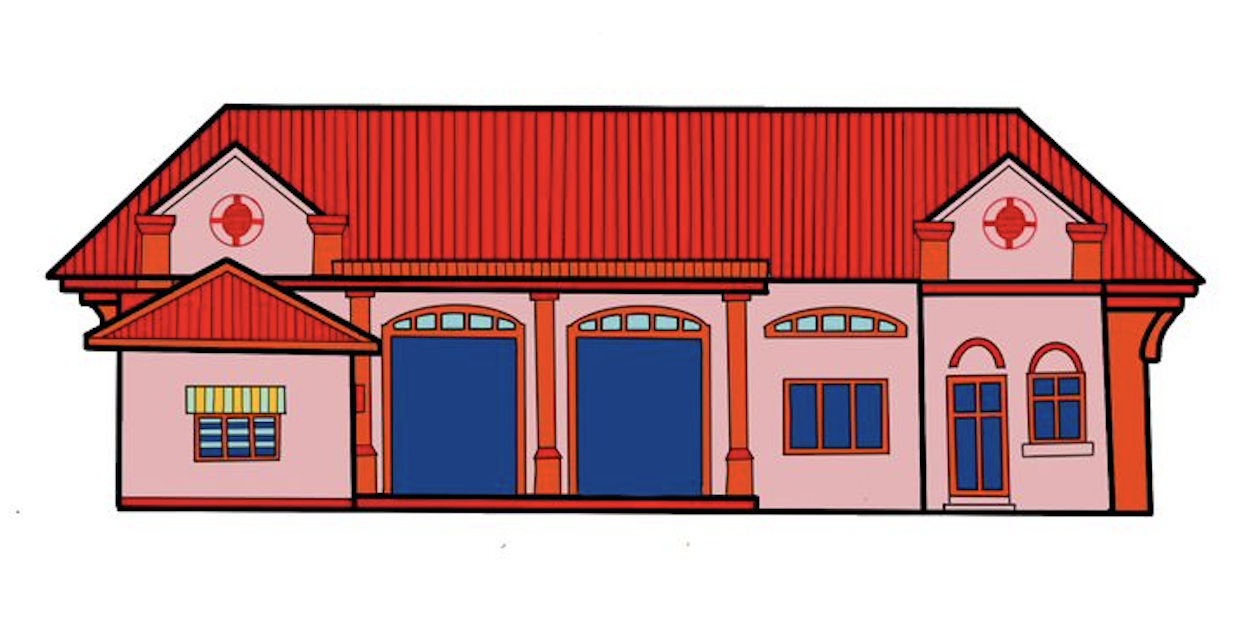
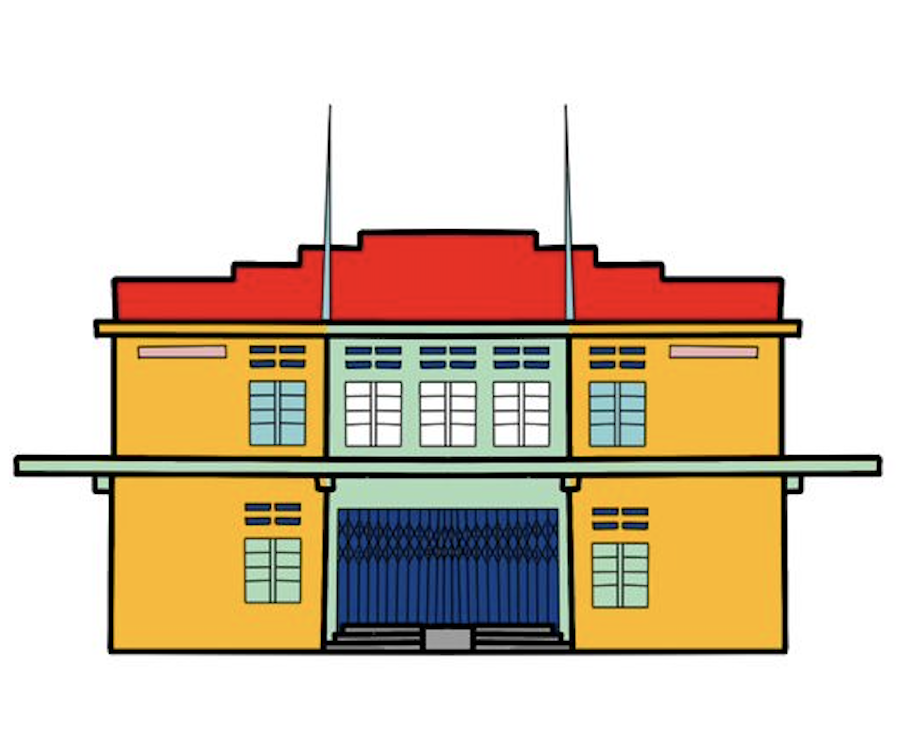
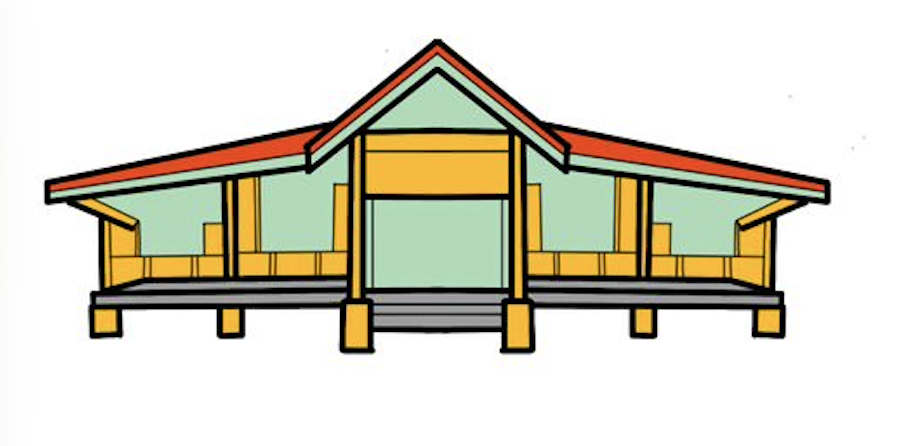
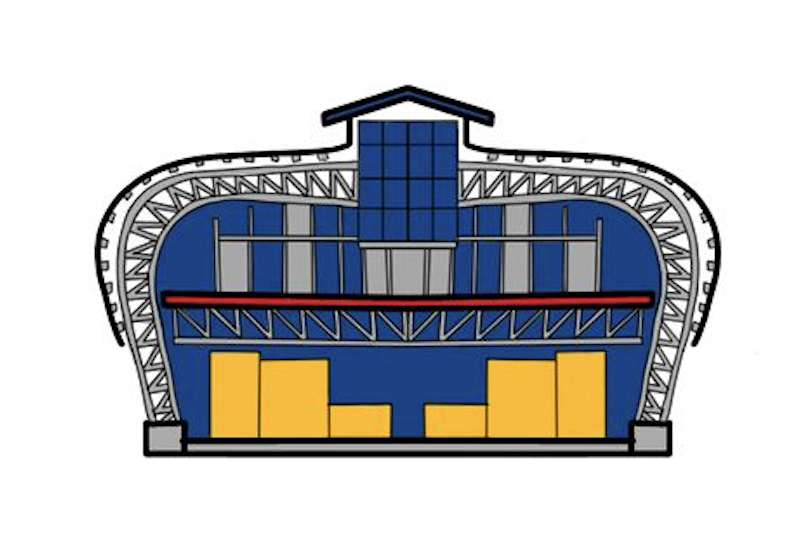
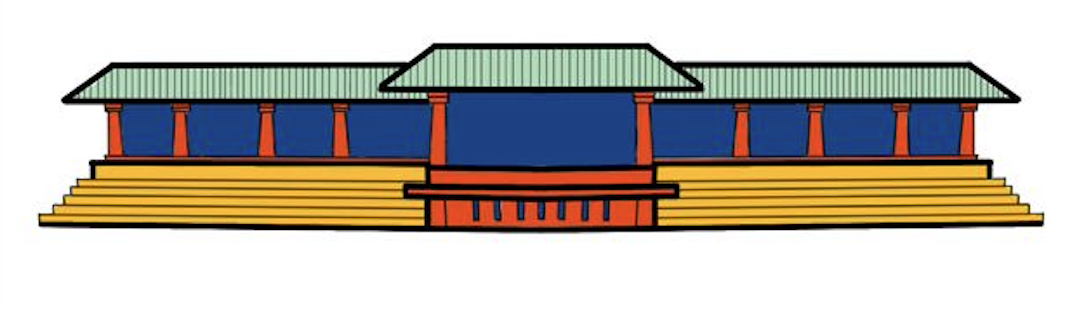
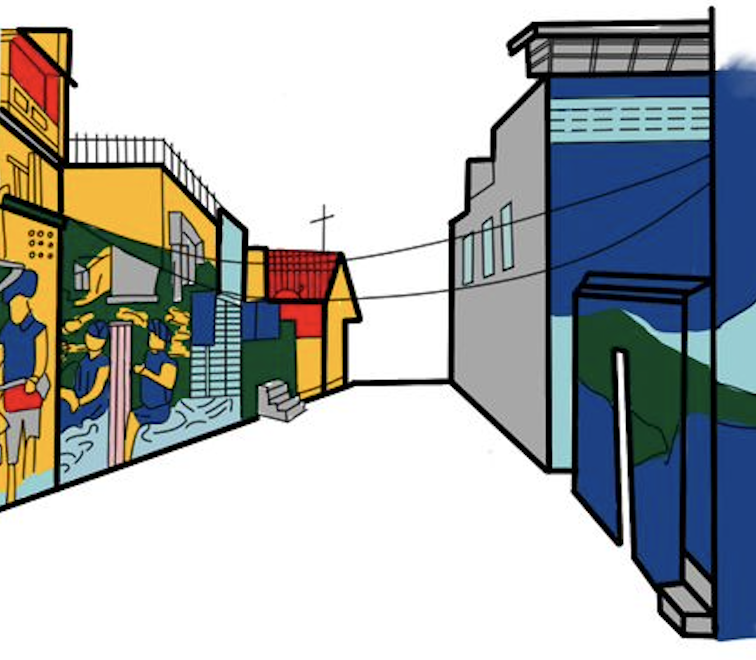
Every stop on the trail has a distinct architectural character. Each building was studied and illustrated as a flat elevation — simplified, colourful, and immediately recognisable. Together they form the visual vocabulary of the trail map.
From the art deco train station to the traditional Malay house, the fire station to the community hall — KKB's built environment is more varied than it first looks.


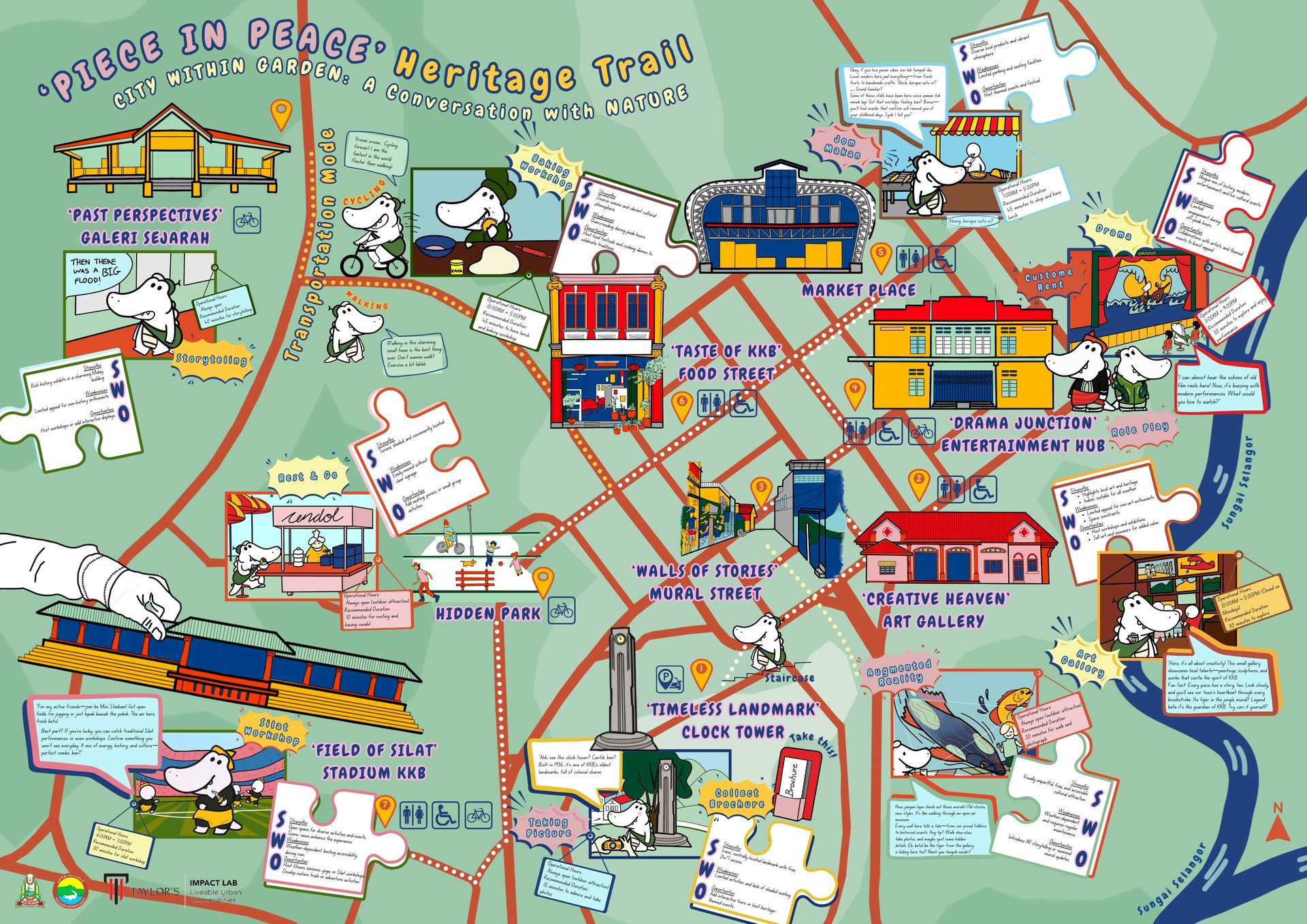
The illustrated trail map brings everything together — 9 stops, Yaya as guide, the buildings, the river, the food. Every element of the design system visible in one place.
Designed as a printed souvenir guide — the kind you slot into the puzzle box and light up.
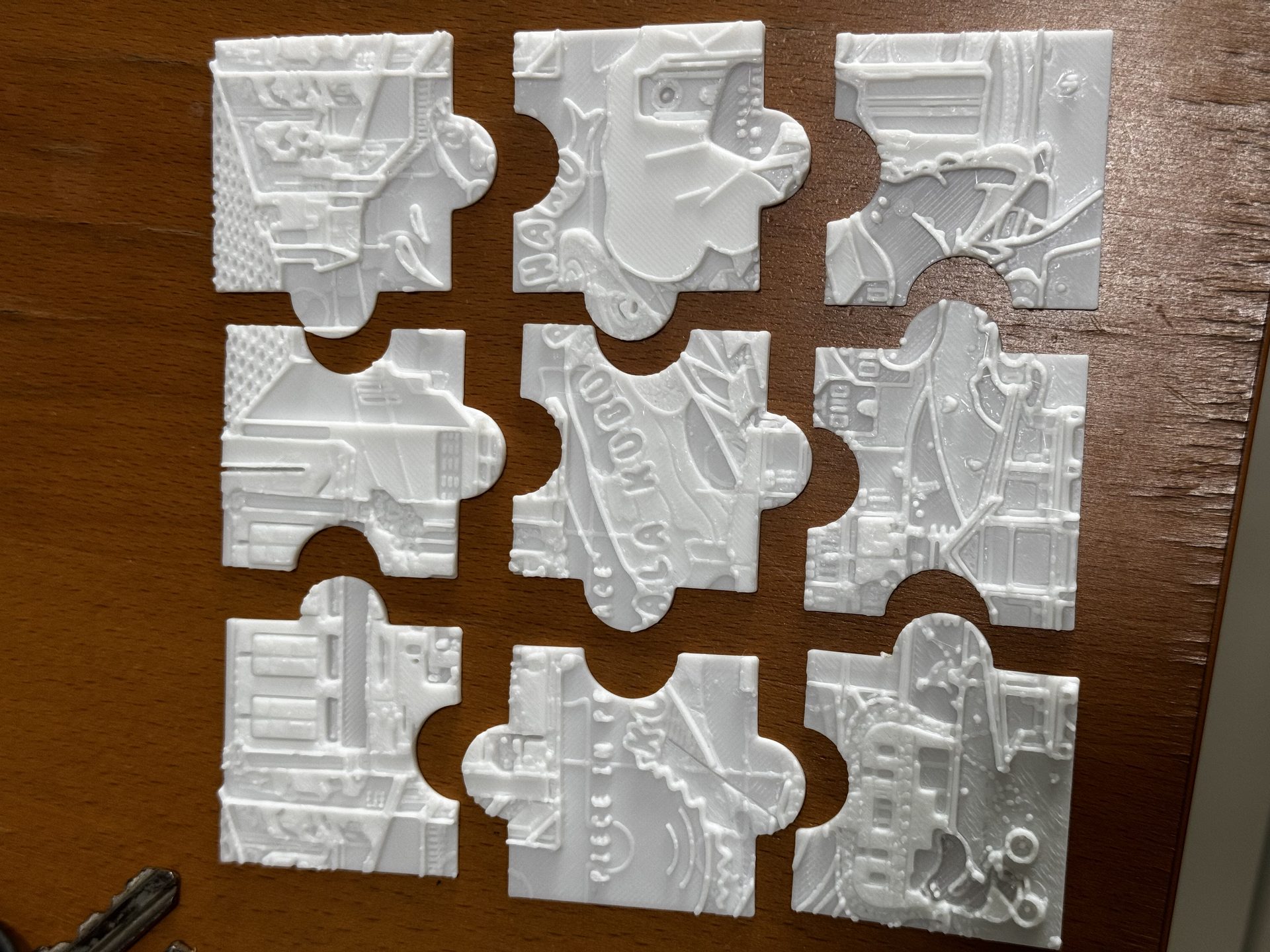
The souvenir concept uses the puzzle piece as its central metaphor. Every stop on the trail is one piece; the full picture only comes together when you've visited them all. Nine 3D-printed tiles, each carved with a different corner of KKB's urban fabric in bas-relief.
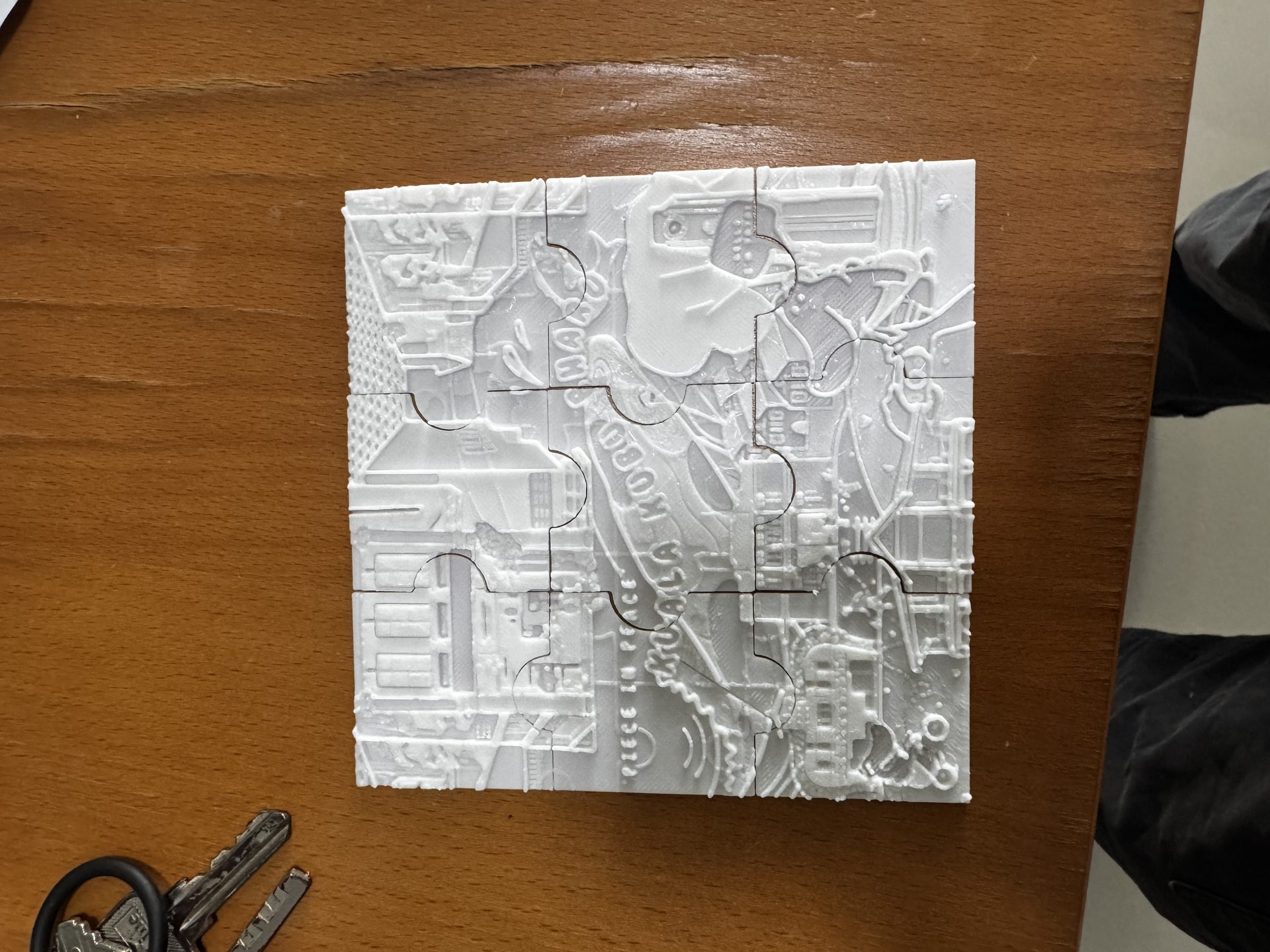
"Piece In Peace — Kuala Kubu Bahru." The assembled puzzle becomes a display object. The separated pieces are the trail.
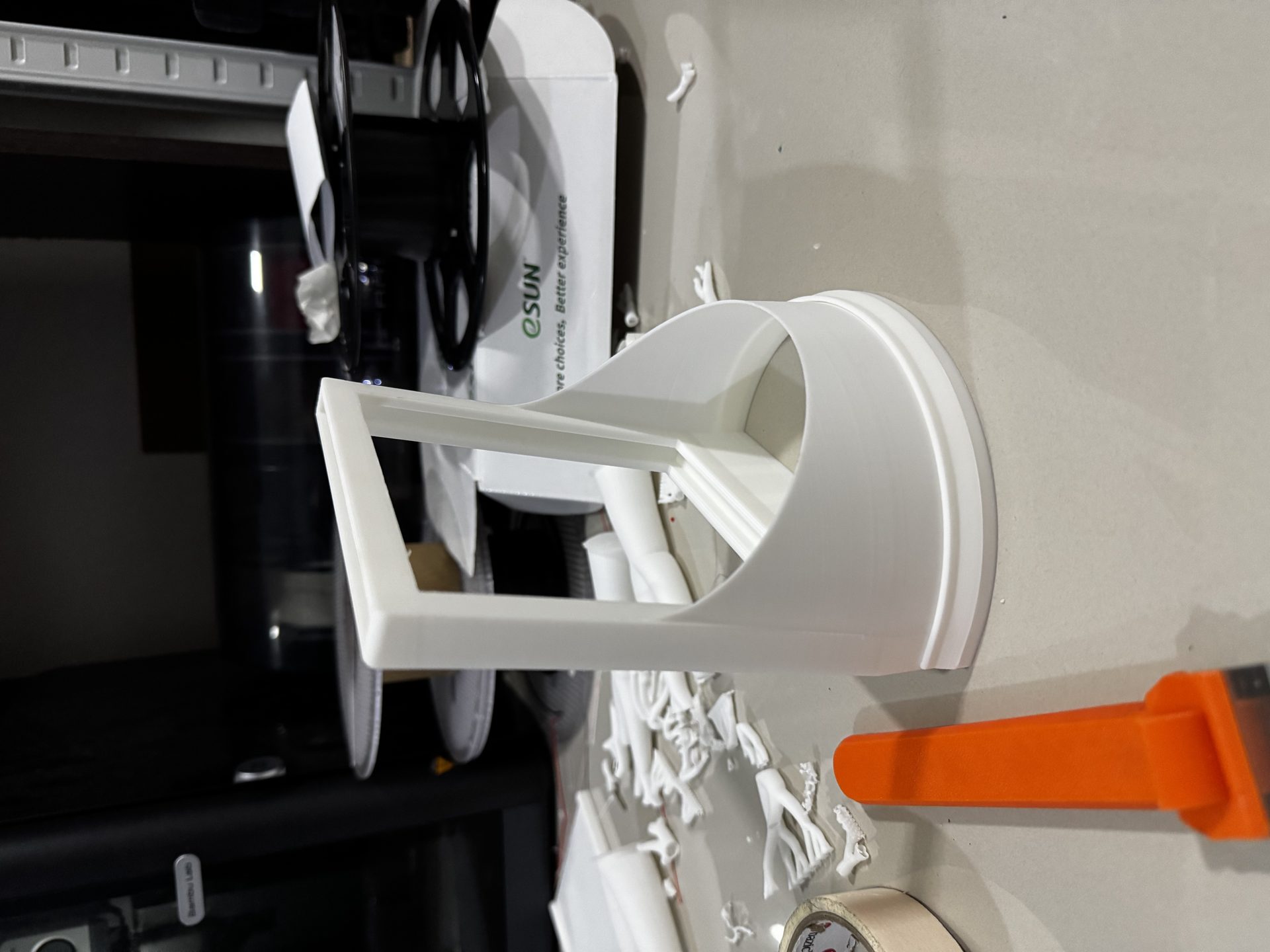
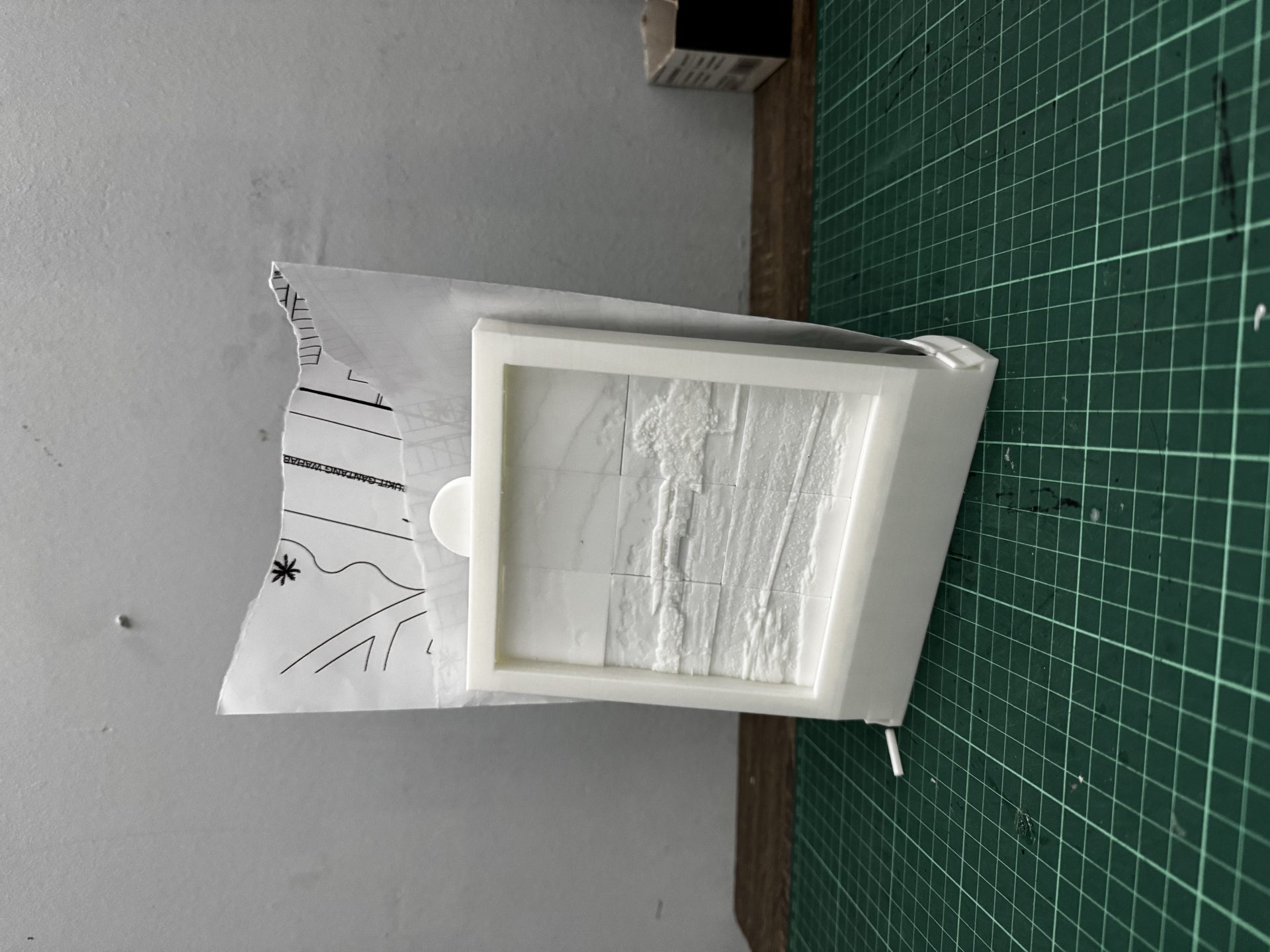
Designed, modelled, and printed in-house using a Bambu Lab printer. The first prototype tested the frame-and-stand system. The second refined the stand geometry for stability.
Nine puzzle tiles, each with a different KKB landmark carved in bas-relief. Printed flat, assembled by hand. The final run came out clean enough to backlight.


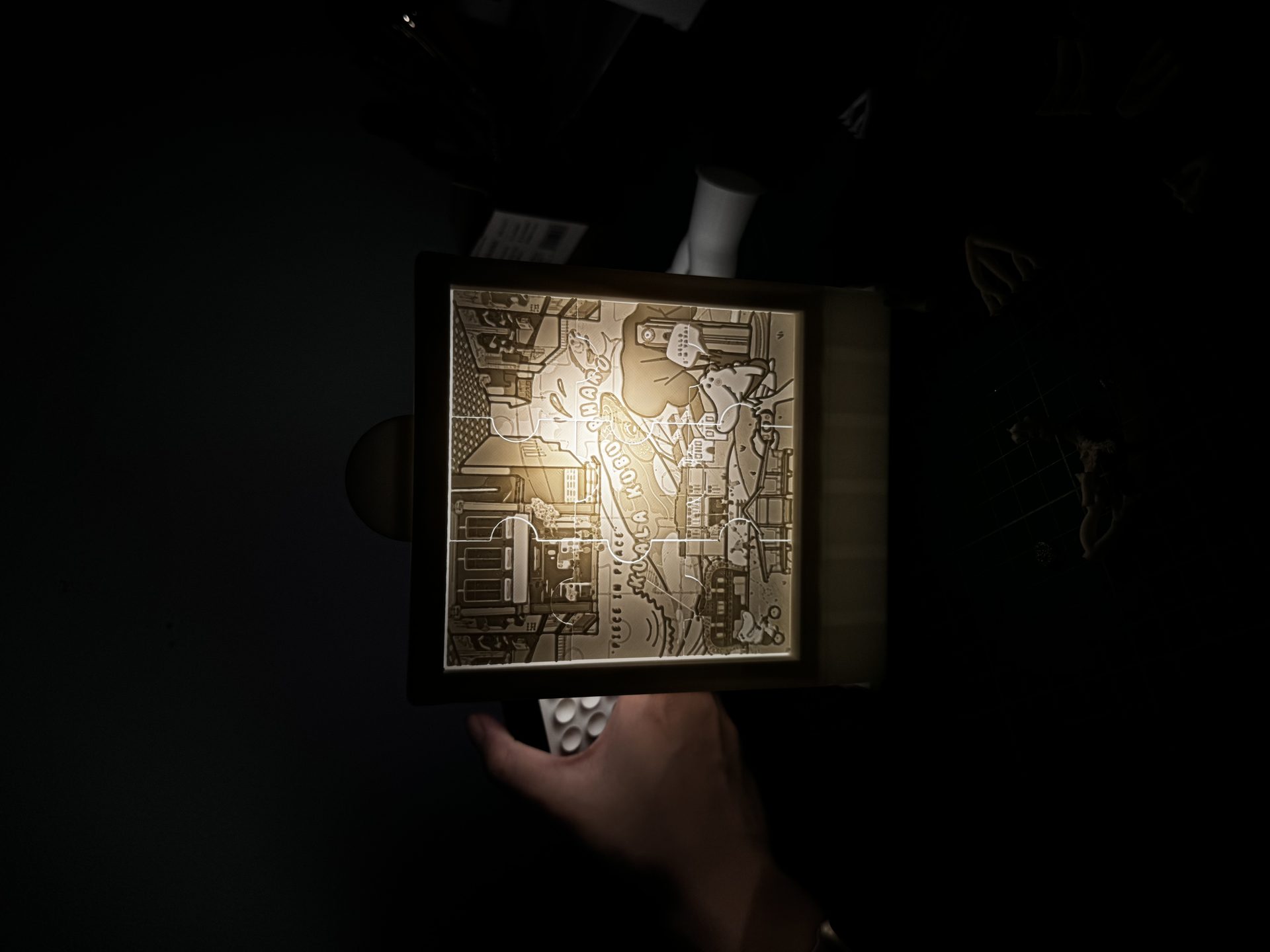
Assembled in its frame, with a light source behind it. The bas-relief becomes a lithophane — raised surfaces diffuse light differently from the flat ones, and the whole illustrated map becomes luminous.
Unplanned. The frame was designed as a display stand. But when backlit, the material turned the souvenir into something else entirely — a night light, a display piece, a proper keepsake.