Architecture Thesis · Taylor's University
Taylor's University · 2024–2025
A final year architecture thesis proposing a cycling and wellness hub in Old Town Ipoh — reconnecting locals to the city through movement, green space, and community.
01 · Context
Ipoh's Old Town is defined by its architectural heritage and slow, lived-in rhythms — but public health infrastructure has struggled to keep pace with its population.
This project proposes a Cycling & Wellness Centre that stitches into the urban fabric of Old Town, offering residents a dedicated space for physical activity, outdoor recreation, and social connection.
Cycling is central — not as sport, but as a low-barrier, community-scale mode of movement. The brief called for spaces that serve all ages, from informal outdoor fitness to specialist wellness facilities.
Site
A prominent corner lot adjacent to Ipoh's Old Town core. Close to the Perak River greenway and existing cycling infrastructure, with strong pedestrian connectivity.
Programme
Indoor cycling track, outdoor fitness nodes, wellness clinic, café (herbal teas & local food), public green plaza, and basement parking — layered across five levels.
Design Strategy
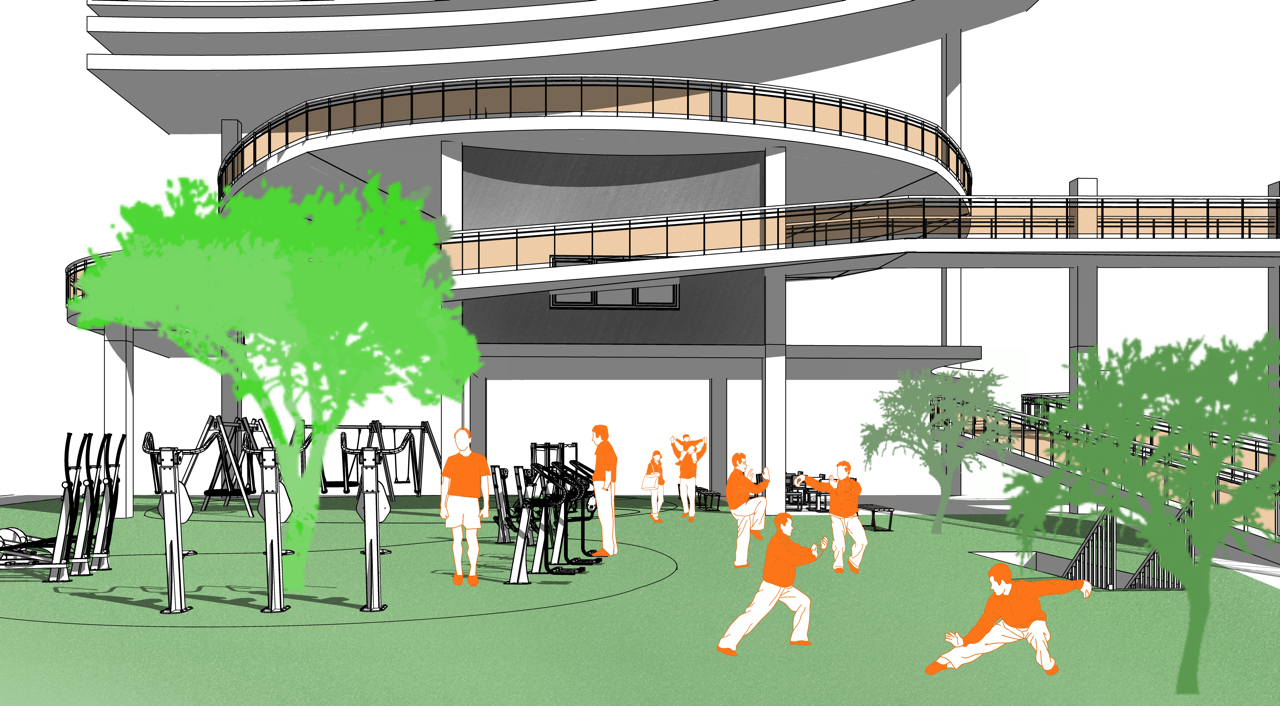
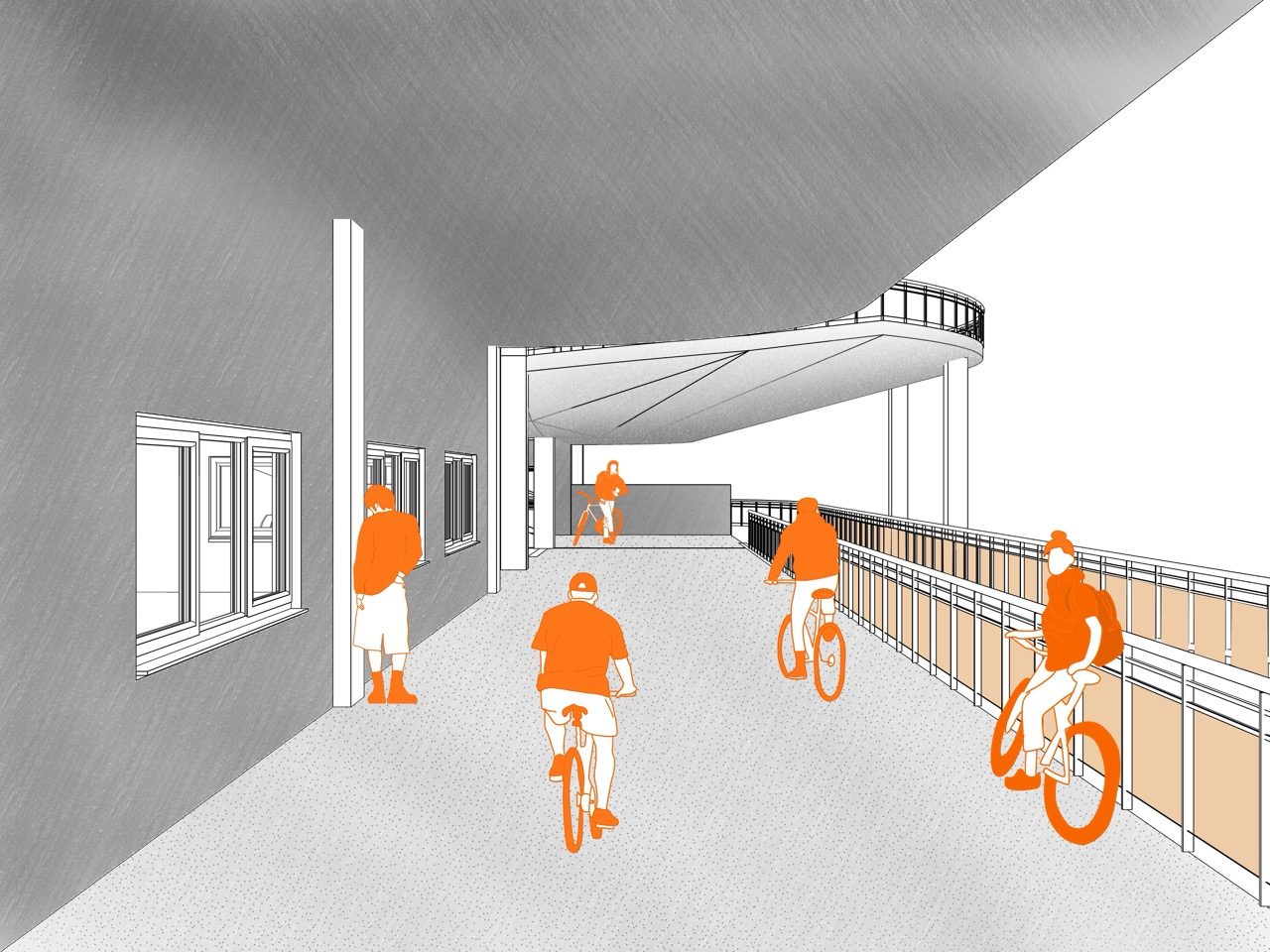
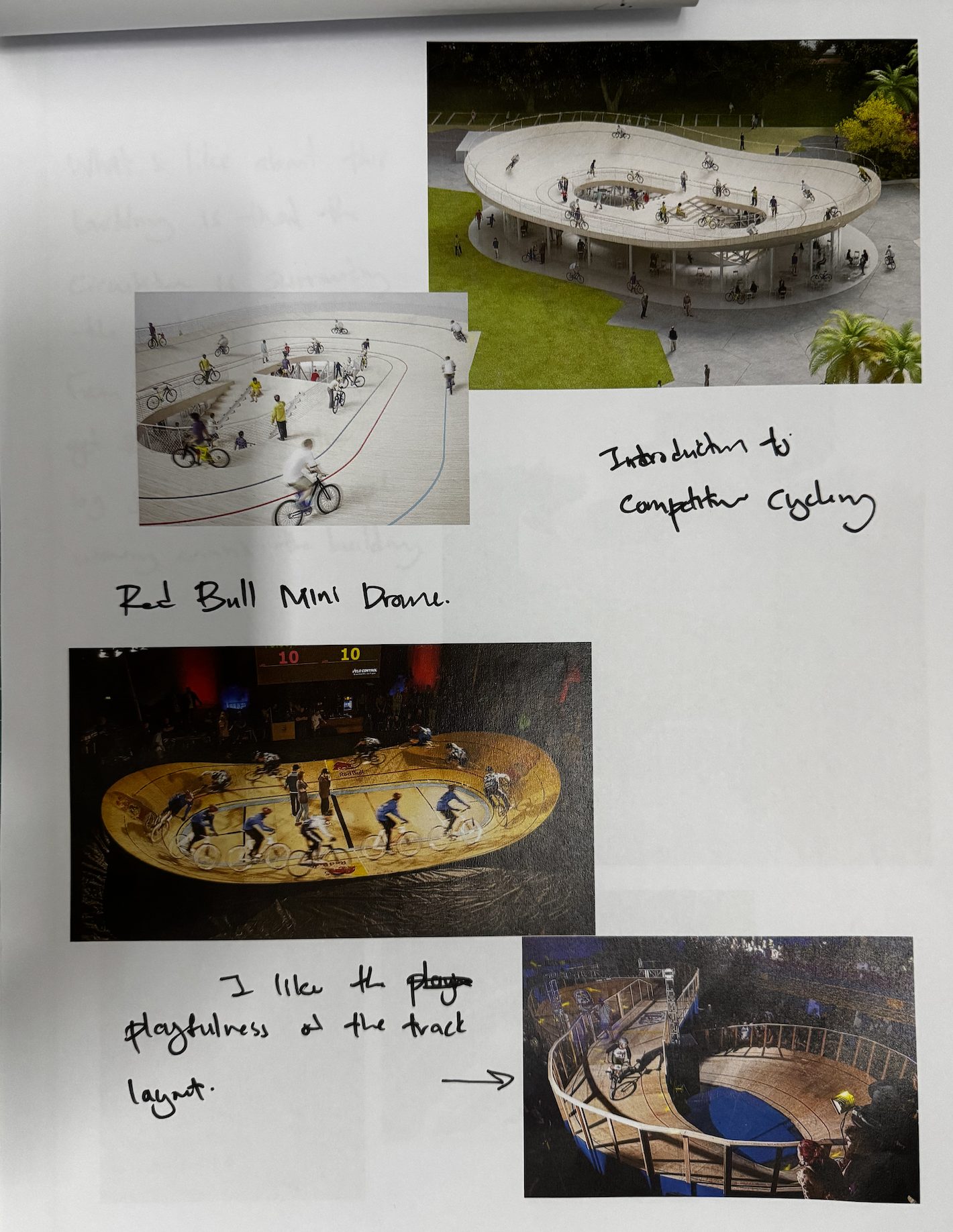
The cycling ramp doubles as the building's structural identity — wrapping the facade and creating visible activity from street level, drawing the public in.
02 · Site
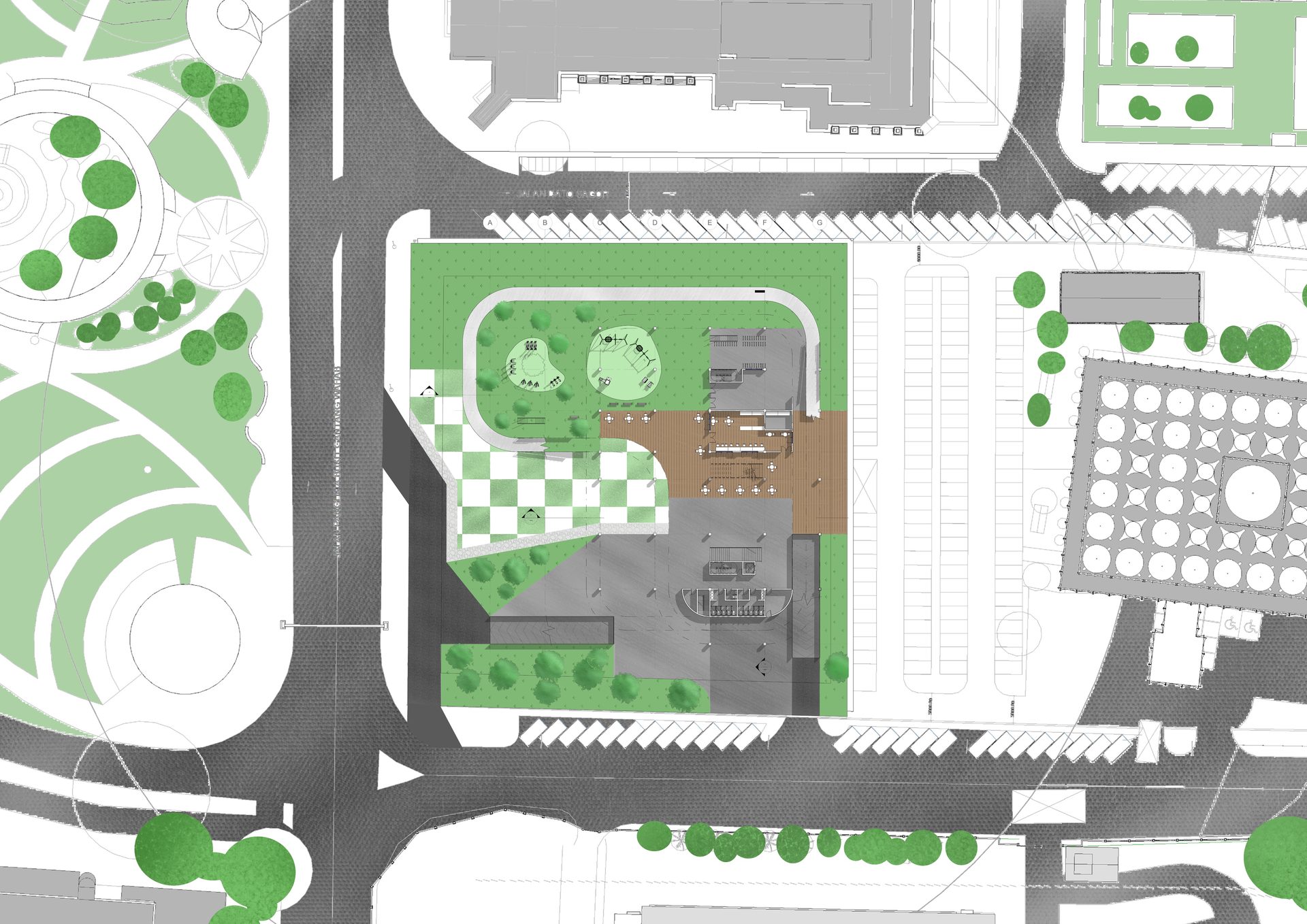
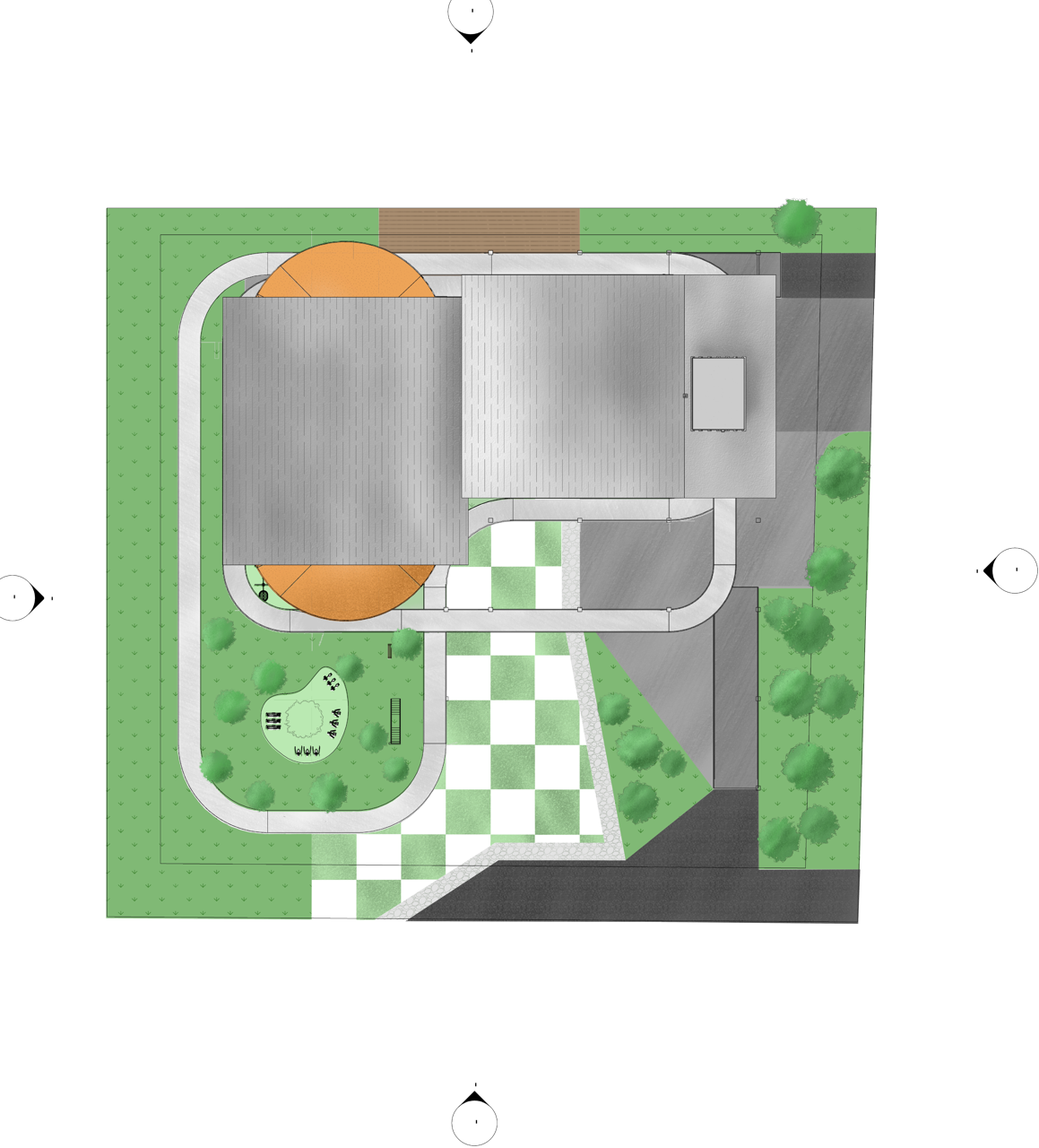
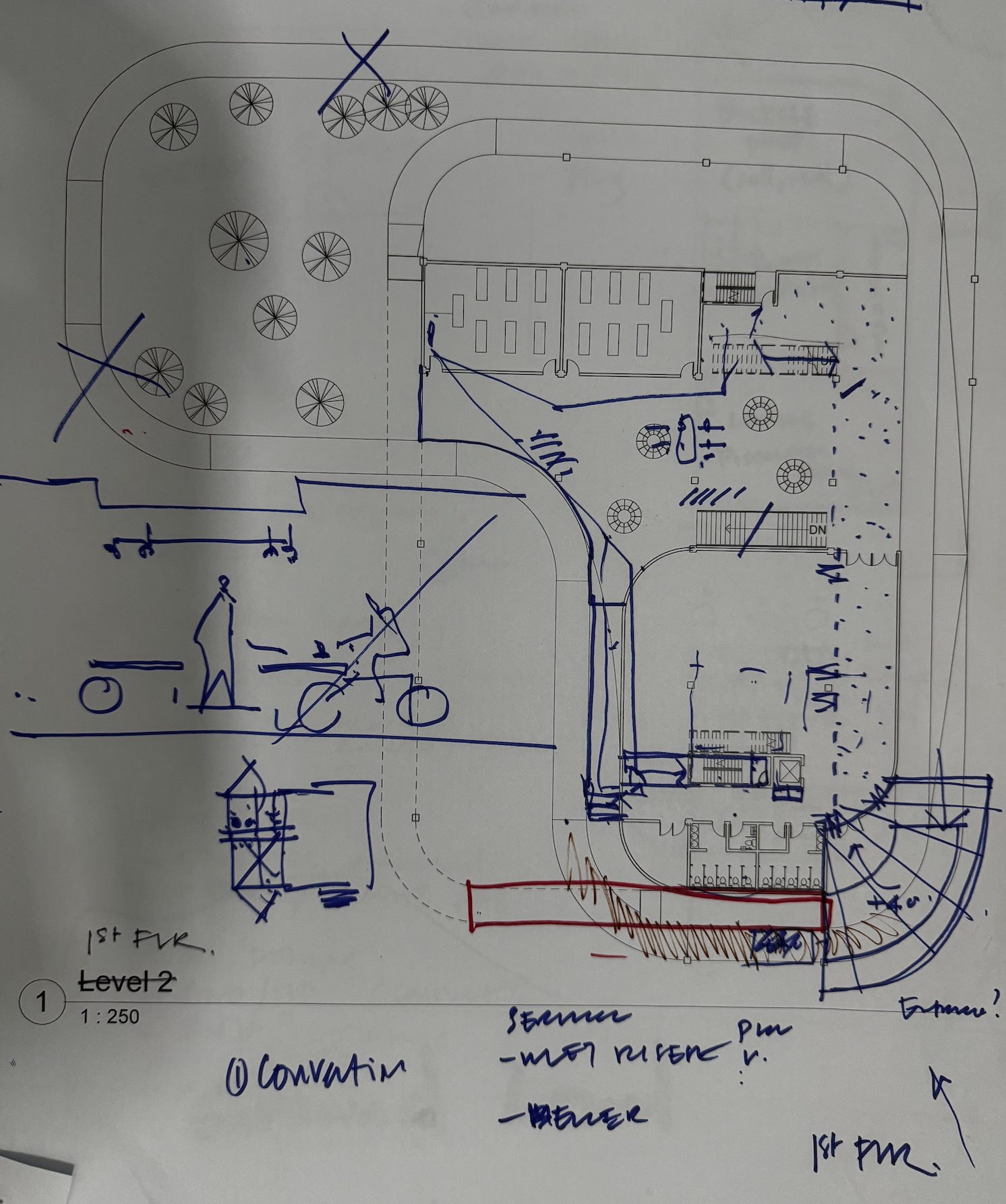
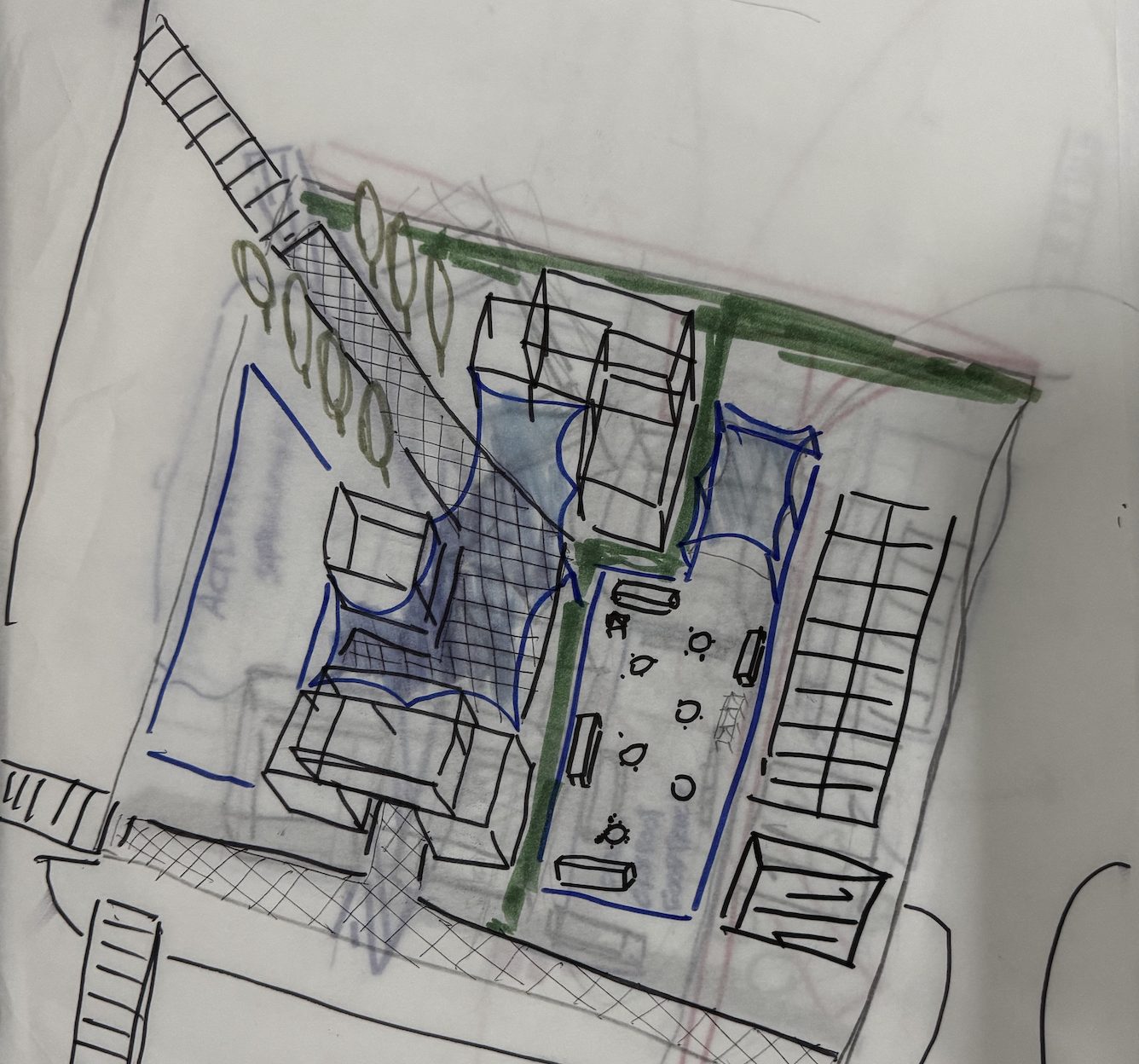
The site sits at the intersection of Ipoh Old Town's commercial and civic zones — a corner condition that creates two distinct fronts: a public-facing plaza to the street and a quieter green edge to the rear.
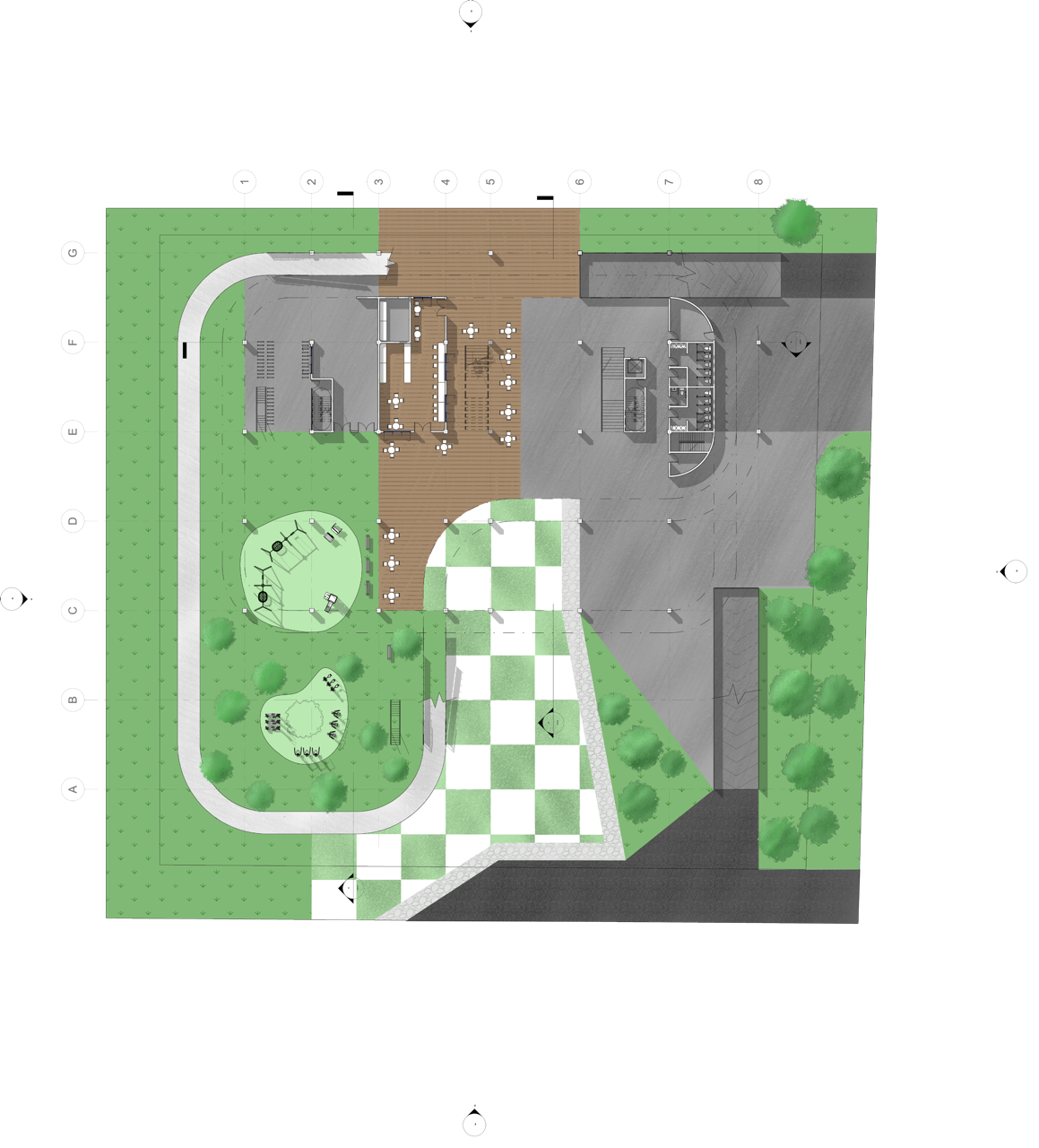
A checker-patterned forecourt blurs building edge and public realm. A landscaped fitness loop brings activity to the ground plane and connects to the existing pedestrian network.
03 · Programme
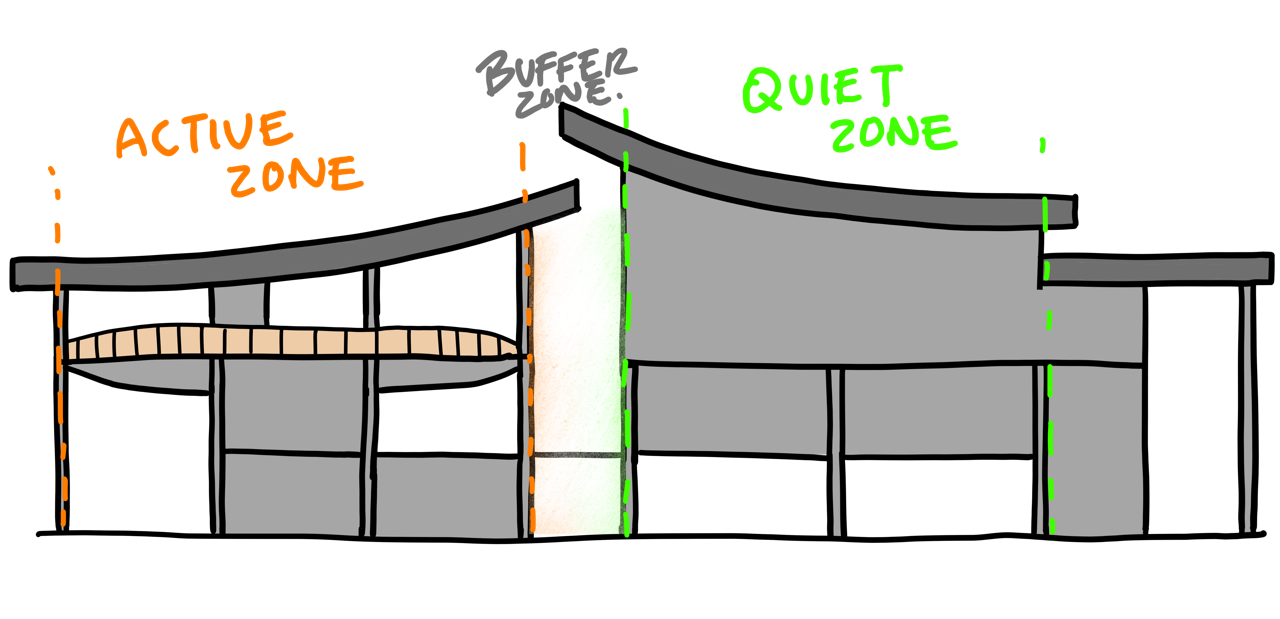
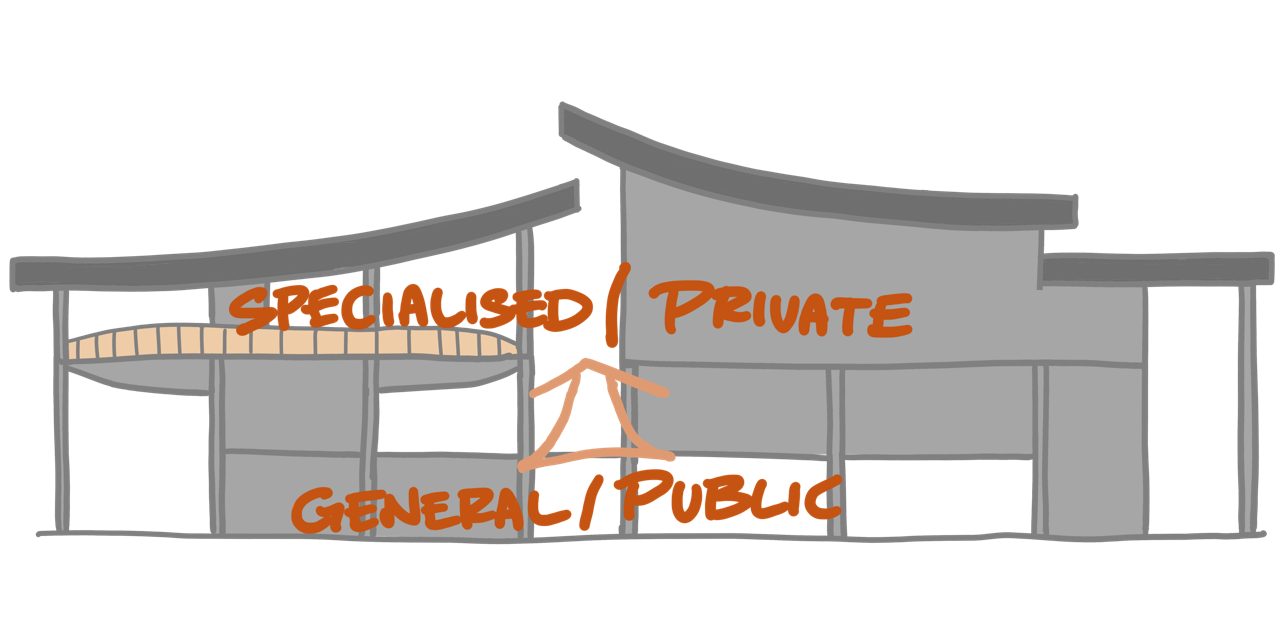
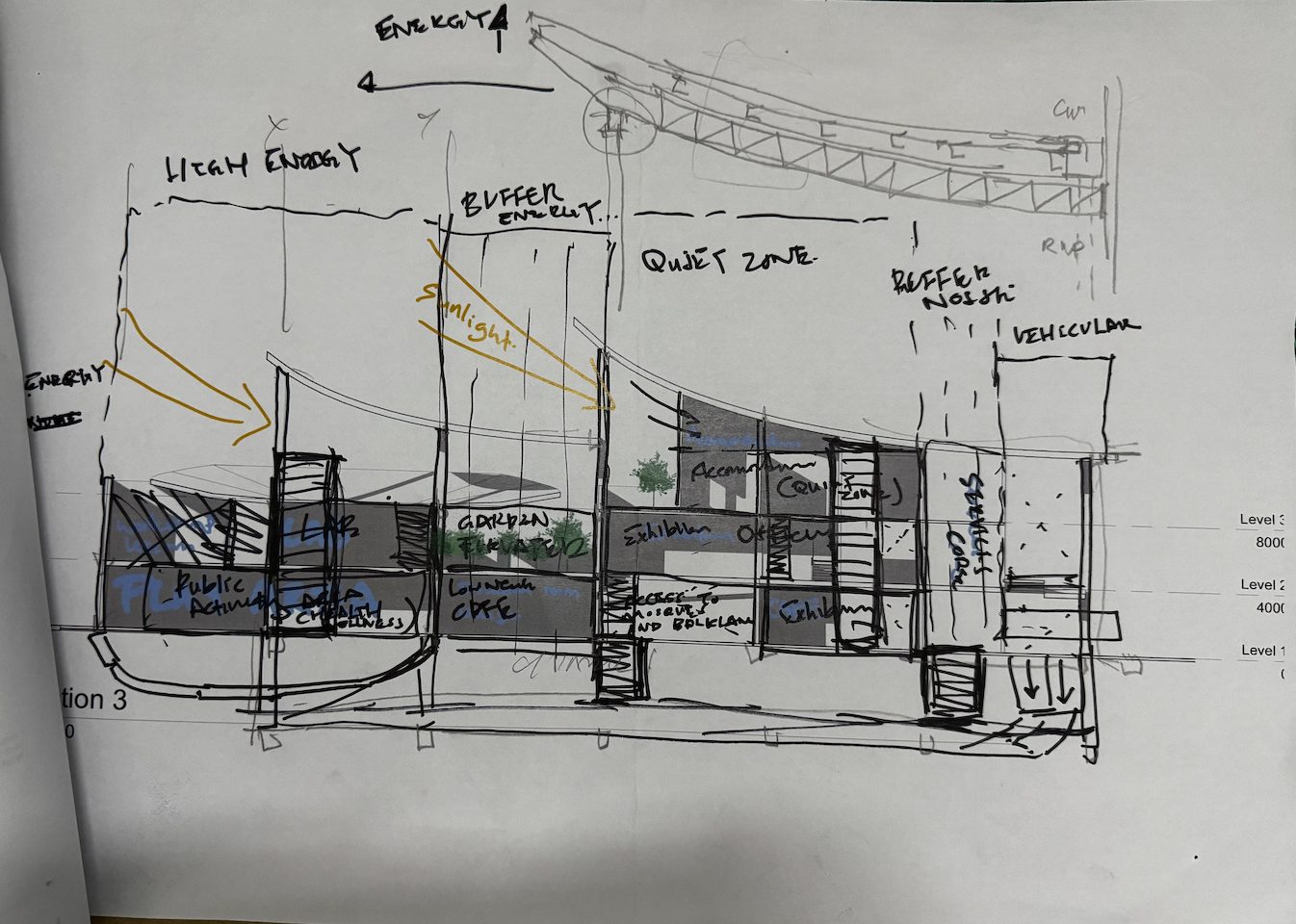
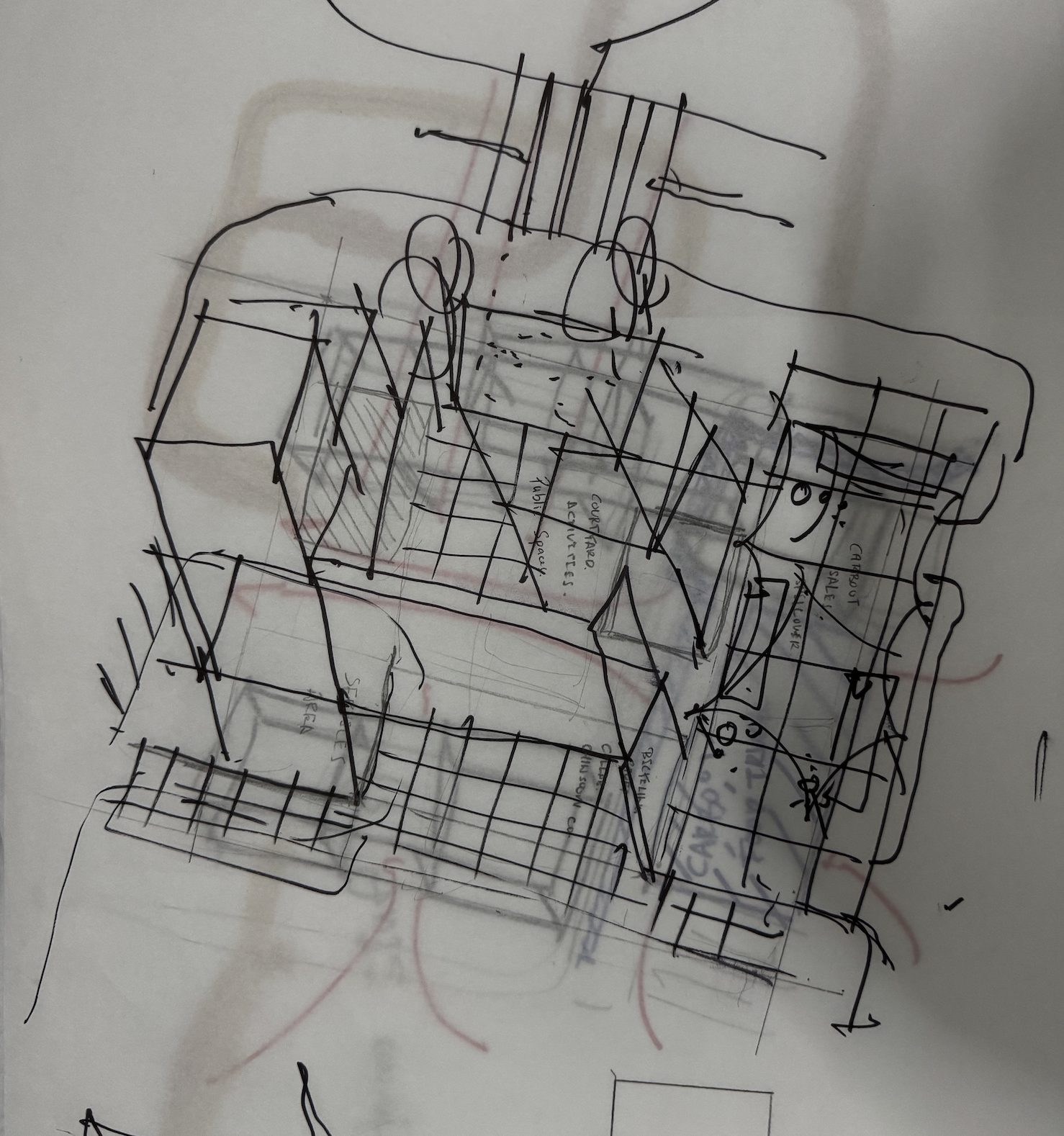
The building is organised across two logics: a horizontal zone split (Active → Buffer → Quiet from west to east), and a vertical programme split (General/Public at ground, Specialised/Private above).
Horizontal Zoning
Active → Buffer → Quiet, reading west to east. The active face engages the street; the quiet edge meets the green buffer.
Vertical Programme Split
General public facilities on the ground level; specialist and private wellness above — separated but linked by the cycling ramp.
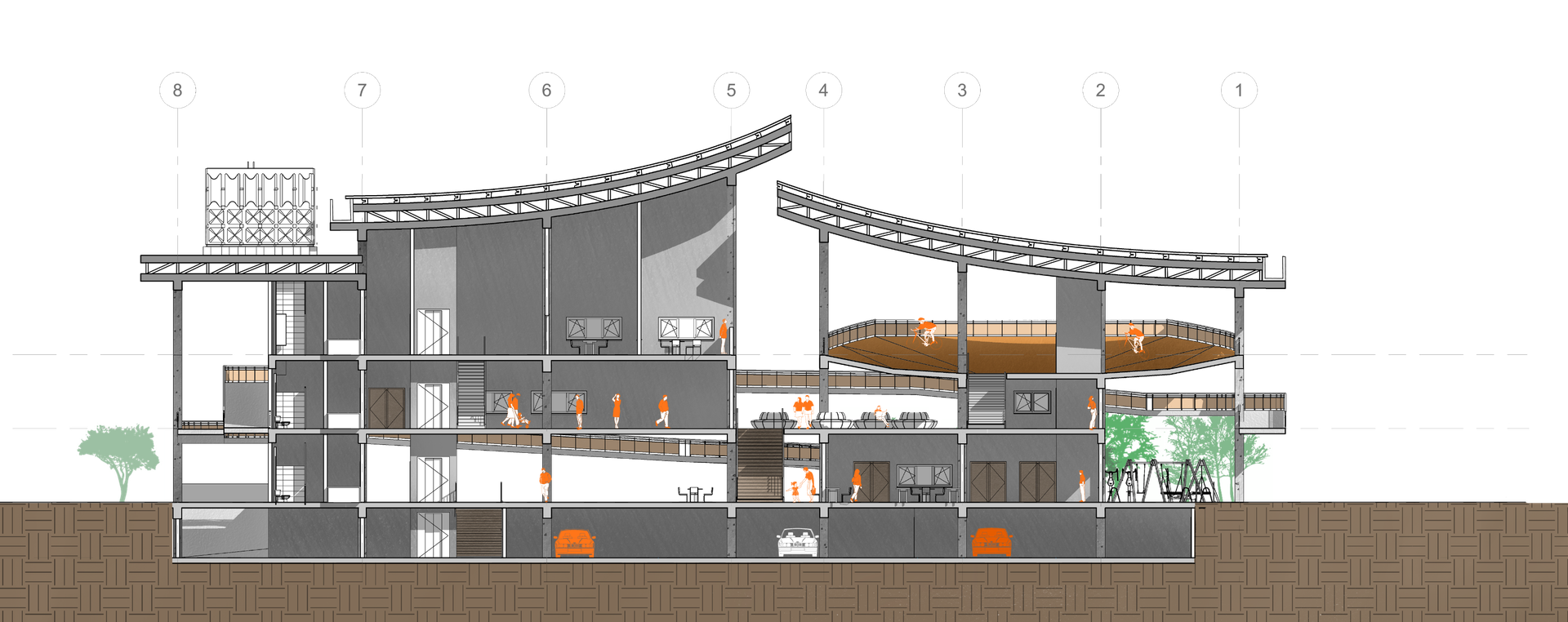
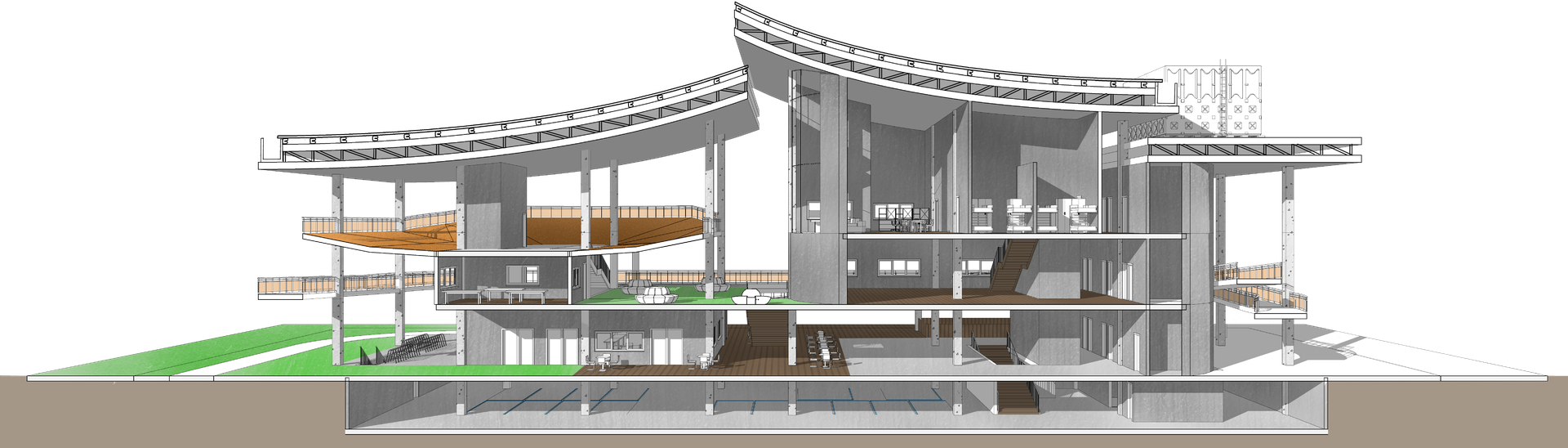
04 · Sectional Perspective
05 · Perspectives
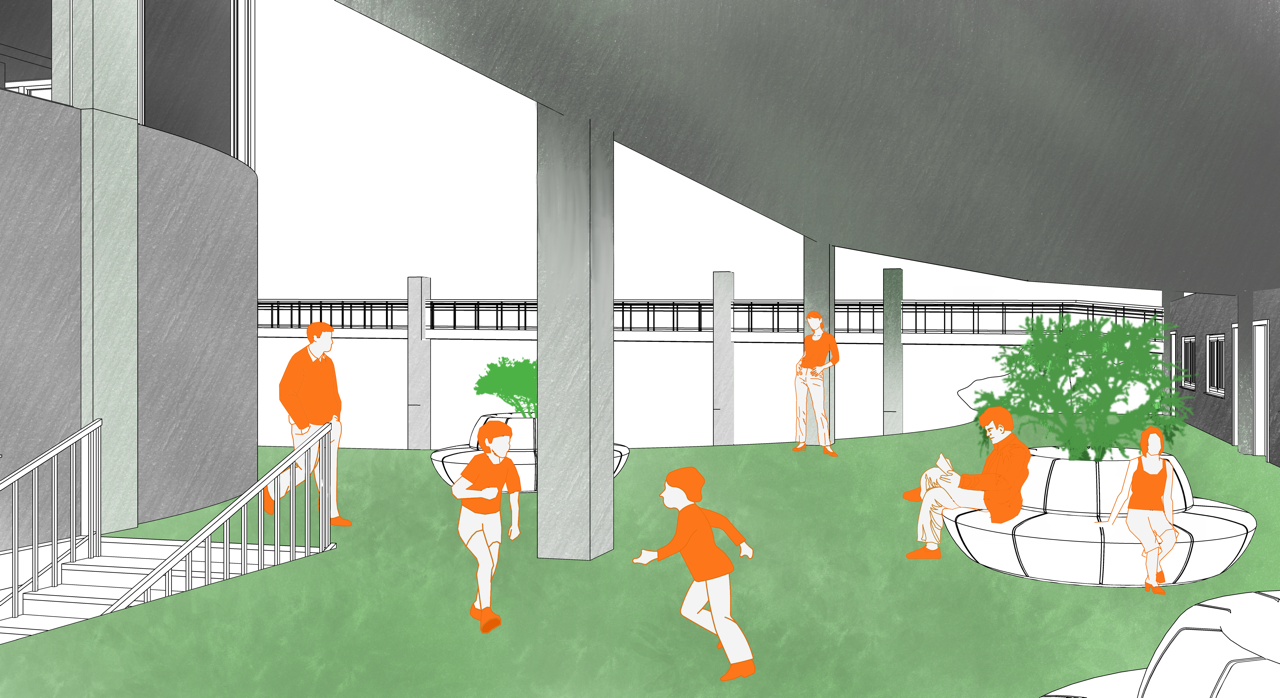
The cycling ramp isn't hidden inside the building — it defines its exterior. Looking in from the street, you see people riding. Looking out from the ramp, you see the city.
06 · Floor Plans
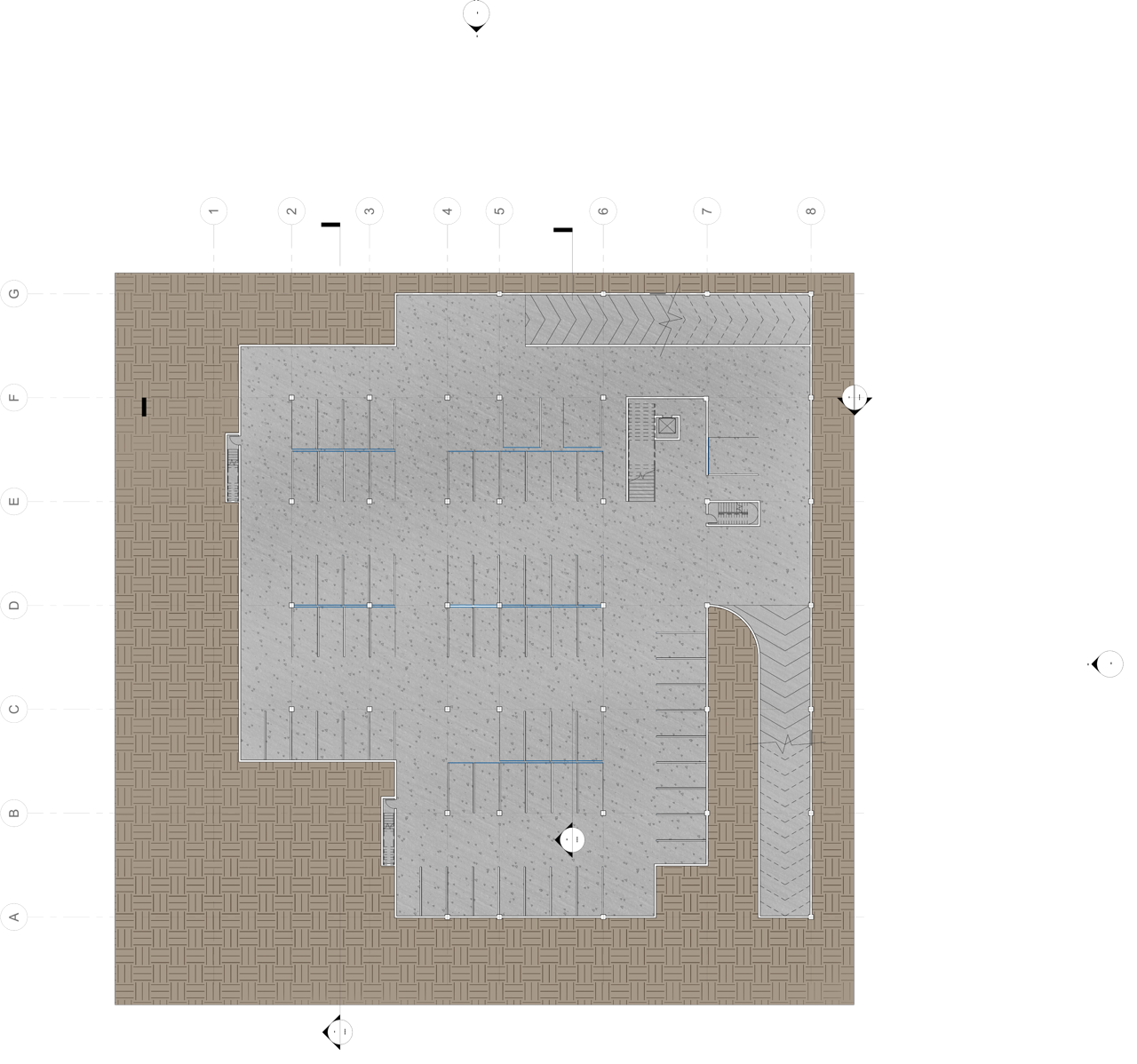
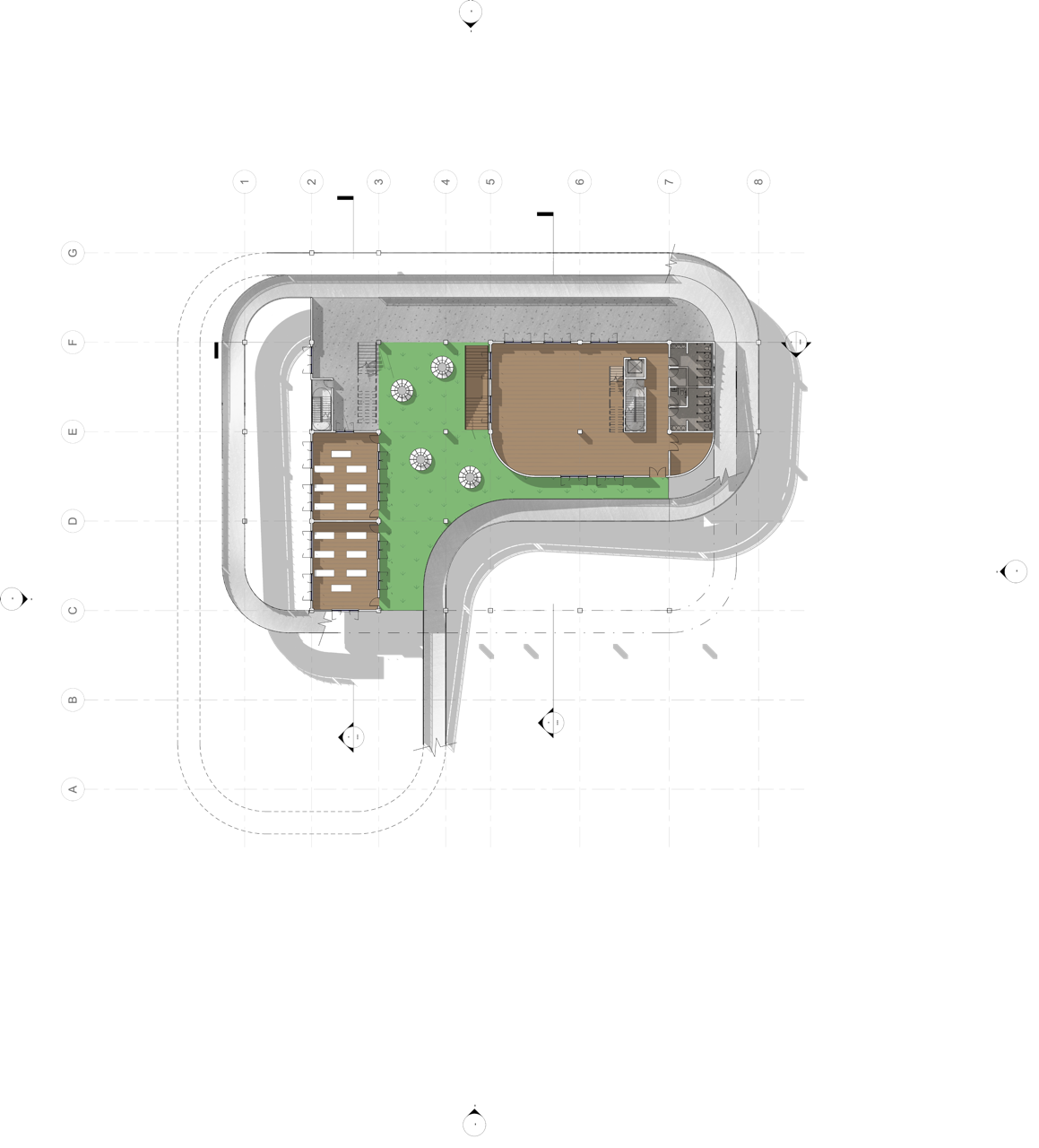
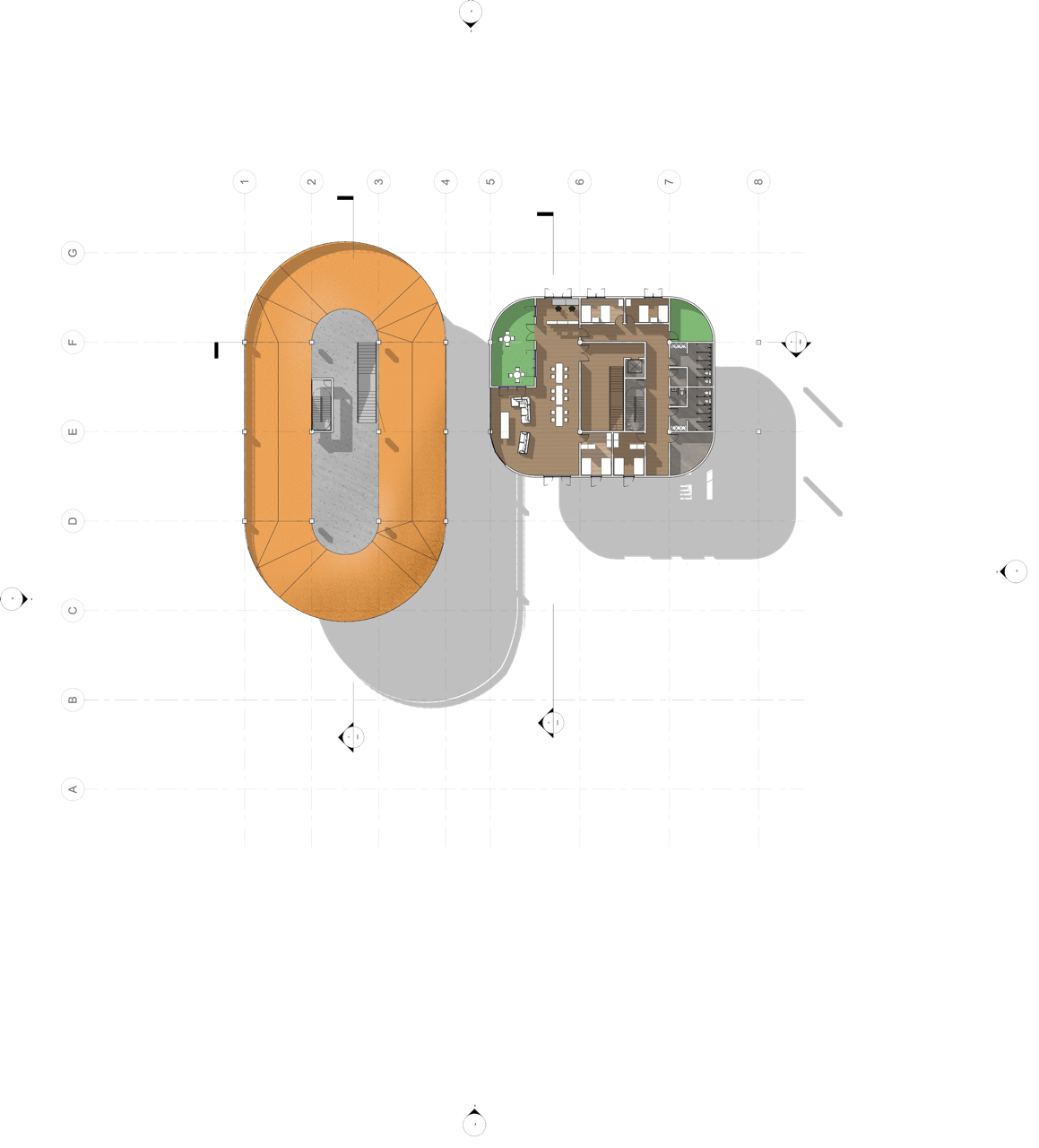
From basement carpark to roof garden, each level serves a distinct programme — tied together by the cycling ramp that circulates through the building's full height.
Basement
Carpark · 200 bays

Ground Floor
Plaza, café, outdoor fitness

Level 1
Cycling track, studios

Level 2
Wellness, private studios

Roof
Sky garden, observation

07 · Sections
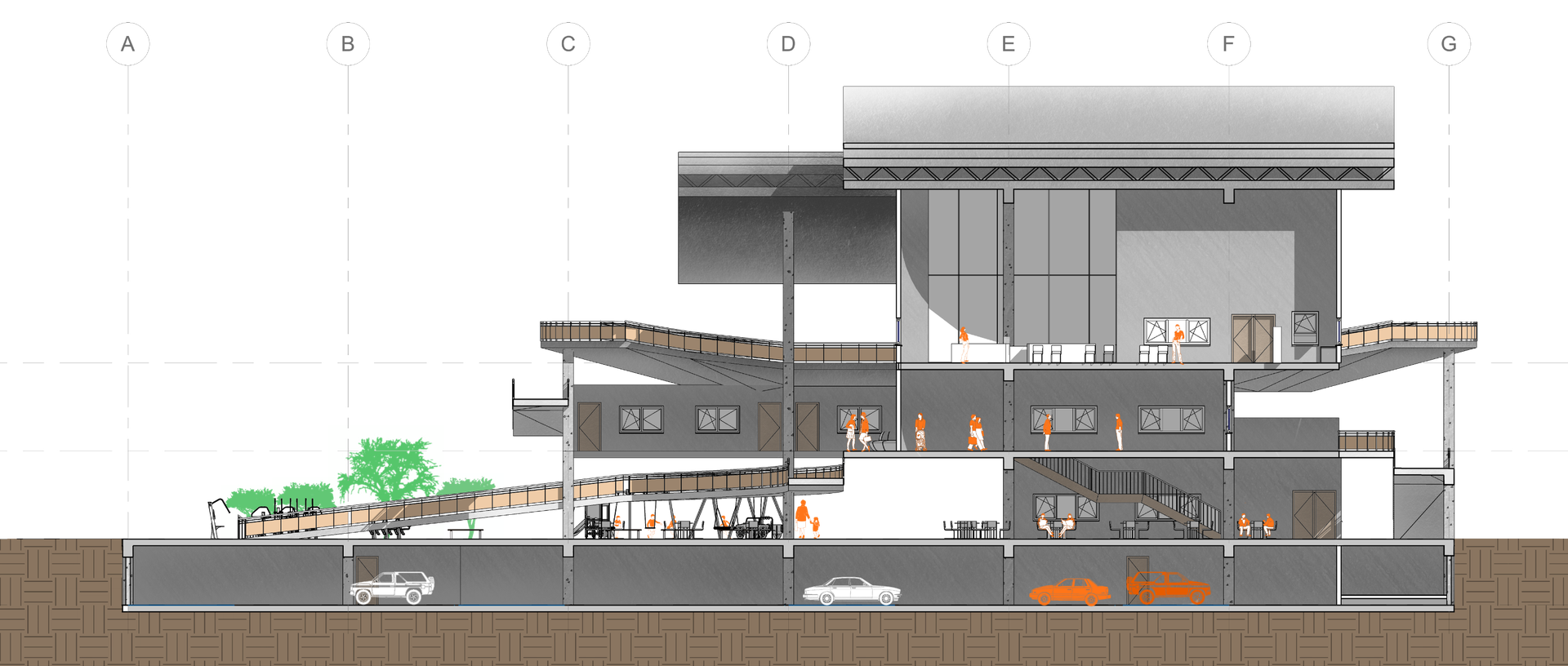
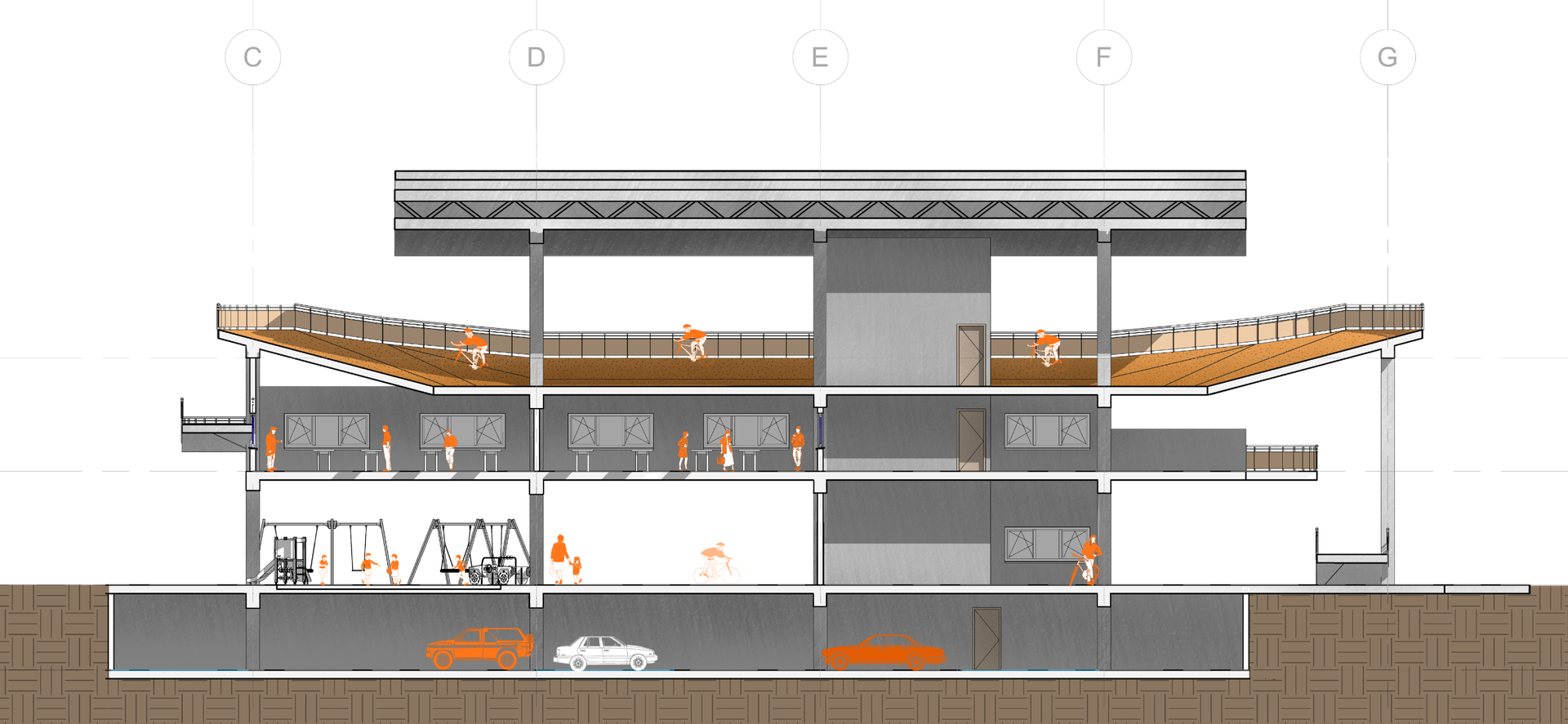
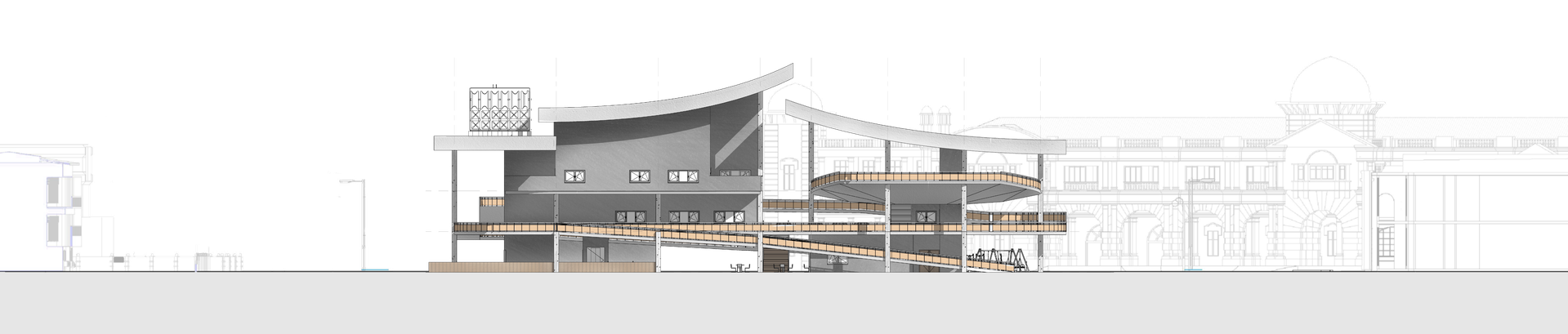
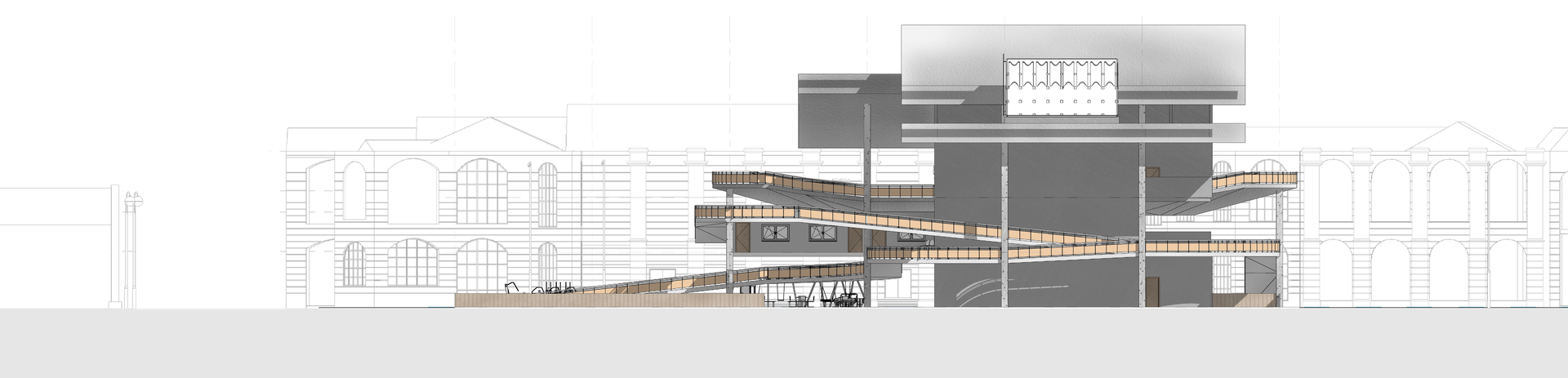
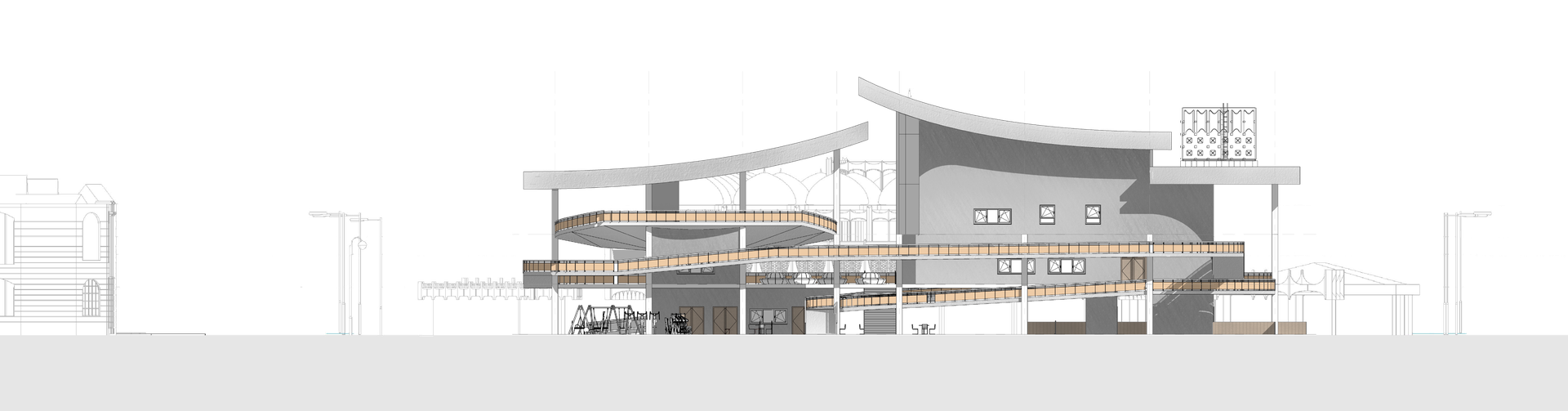
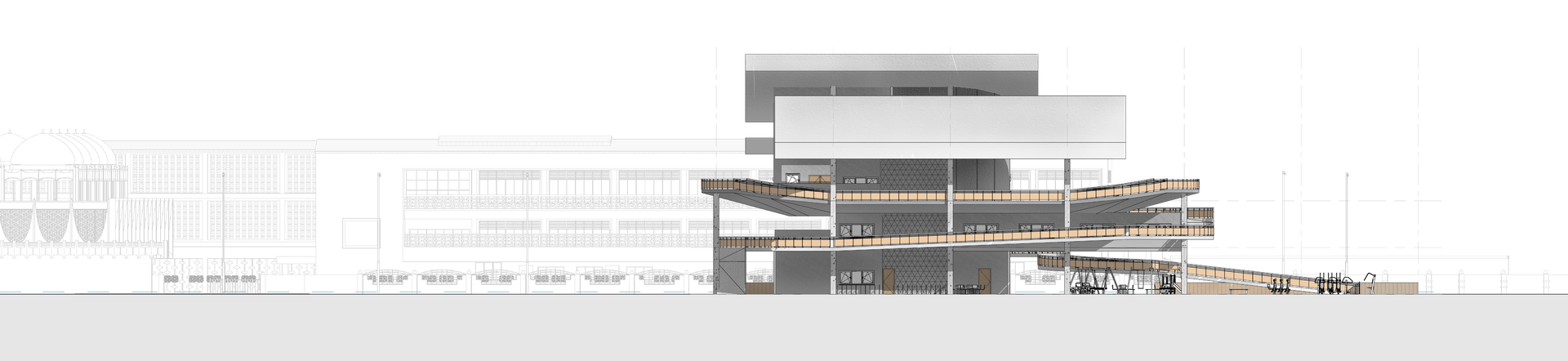
Section cuts revealing the spatial relationships between levels, the cycling ramp's geometry, and how the building meets the ground and sky.
Section A–A · Longitudinal

Section B–B · Transverse

Section C–C · Detail

08 · Elevations
All four elevations — shown at a consistent scale and ground alignment — revealing how the cycling ramp registers differently on each face of the building.
North

South

West

East

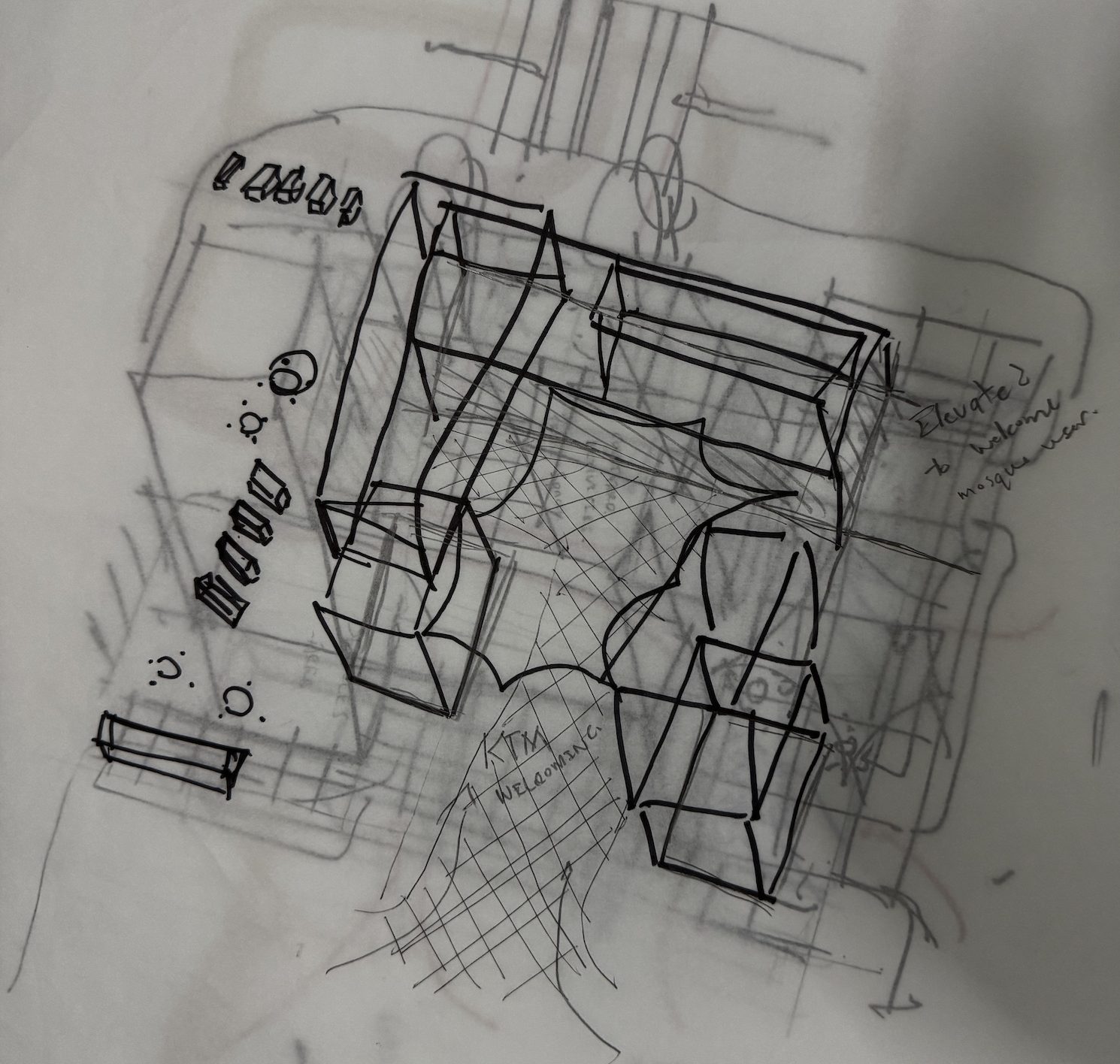
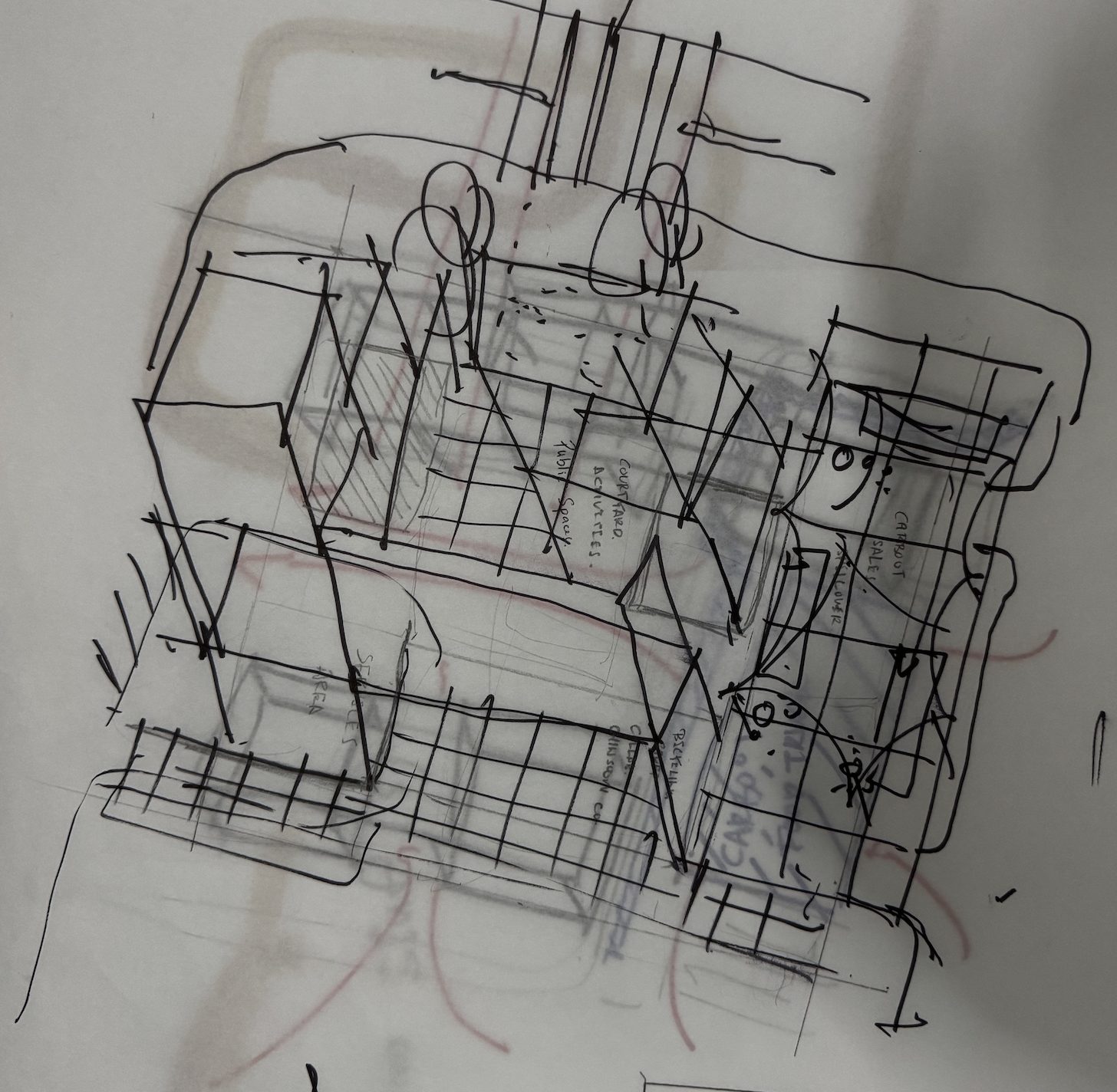
09 · Process
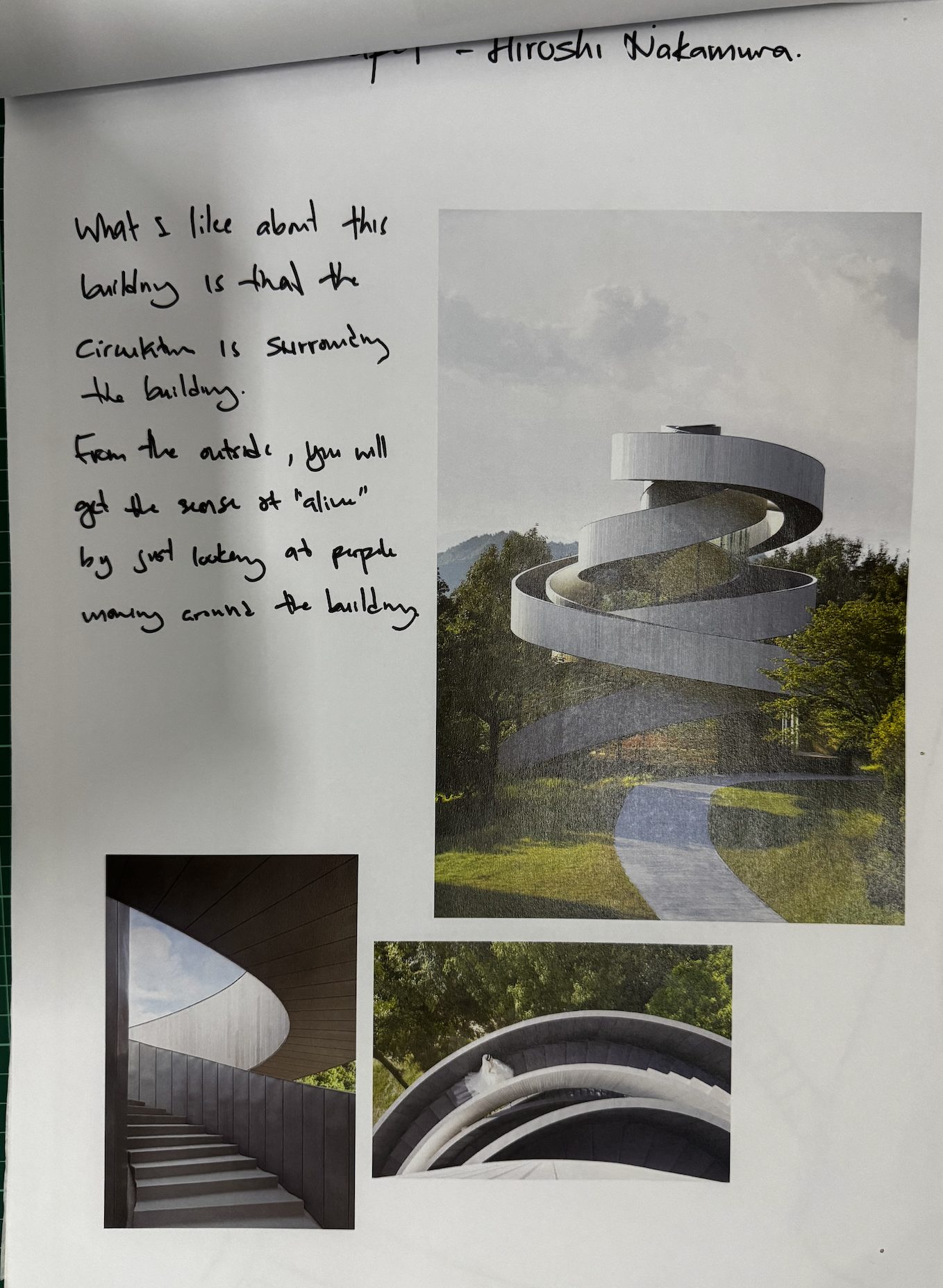
Design process spanning from initial site sketches and spatial studies through to the formal massing. Early thinking was anchored in buildings where circulation is the architecture — movement as the thing you experience, not the thing you do to get somewhere.